


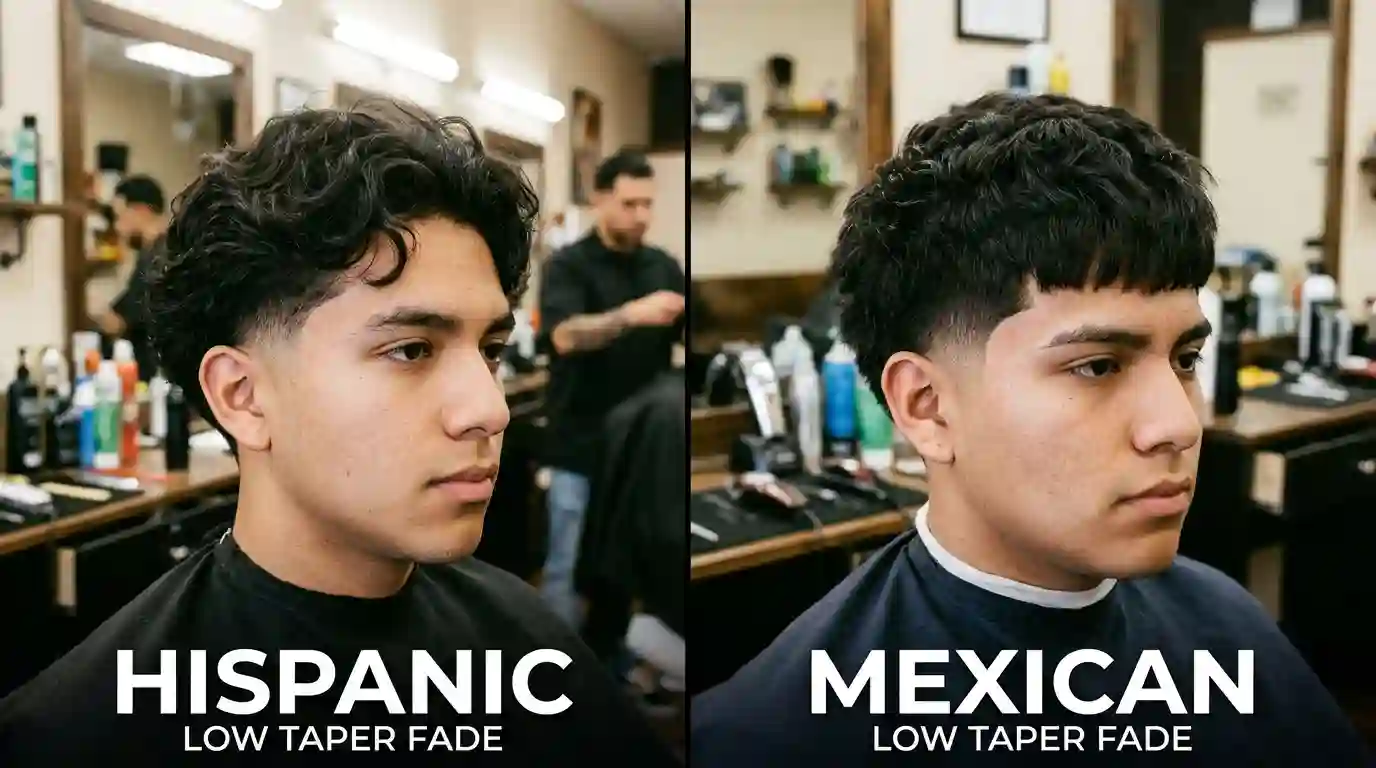
A low taper fade is a clean and stylish haircut that works with many hair types and personal styles. You may see it described as a Hispanic low taper fade or a Mexican low taper fade, especially in men’s hairstyle searches. Both terms often refer to similar haircut ideas, including neatly tapered sides, a natural-looking blend, and a longer top.
However, Hispanic and Mexican do not describe two different haircut techniques. Hispanic refers to a broad cultural identity, while Mexican refers to a nationality or heritage. The haircut itself depends more on hair texture, personal taste, and the barber’s technique than on someone’s background.
This guide explains the difference between a Hispanic vs Mexican low taper fade, shares hairstyle ideas for straight, wavy, and curly hair, and covers barber instructions, styling, and maintenance.
Hispanic vs Mexican Low Taper Fade: Differences, Hairstyles, and Pictures
A low taper fade is a clean and stylish haircut that works with many hair types and personal styles. You may see it described as a Hispanic low taper fade or a Mexican low taper fade, especially in men’s hairstyle searches. Both terms often refer to similar haircut ideas, including neatly tapered sides, a natural-looking blend, and a longer top.
However, Hispanic and Mexican do not describe two different haircut techniques. Hispanic refers to a broad cultural identity, while Mexican refers to a nationality or heritage. The haircut itself depends more on hair texture, personal taste, and the barber’s technique than on someone’s background.
This guide explains the difference between a Hispanic vs Mexican low taper fade, shares hairstyle ideas for straight, wavy, and curly hair, and covers barber instructions, styling, and maintenance.
What Is a Hispanic Low Taper Fade?
A Hispanic low taper fade is a hairstyle that combines a low taper around the temples, sideburns, and neckline with a longer top. The sides gradually become shorter near the edges while most of the hair on top keeps its natural length and texture.
Many people choose this haircut because it looks neat without removing too much hair from the sides. It can be styled with straight hair, natural waves, curls, a textured fringe, or a slicked-back top.
Some popular features include:
- A gradual blend around the ears and neckline
- A natural-looking hairline
- More length and volume on top
- Clean sideburns
- A soft transition between the sides and top
- Optional curls, waves, or textured styling
The exact appearance depends on the person’s preferred finish. A low taper can look subtle and natural or sharp and defined.
What Is a Mexican Low Taper Fade?
A Mexican low taper fade is another popular name for a low taper haircut, often paired with bold styling details. These may include a sharp lineup, an Edgar-inspired fringe, a textured top, or a beard fade.
The main idea is to keep the taper low while giving the top a noticeable shape. Some men prefer a clean and simple finish, while others choose a more detailed haircut with sharp edges.
Common features include:
- A low taper around the temples and neckline
- A crisp lineup or defined hairline
- A textured or blunt fringe
- A longer top for styling
- Optional beard blending
- A clean finish around the sideburns
A Mexican low taper fade can also be combined with straight, wavy, or curly hair. There is no single haircut that represents every Mexican man’s personal style.
Hispanic vs Mexican Low Taper Fade: What Is the Difference?
The two terms are often used to describe similar hairstyles. The difference usually comes from the way the haircut is finished rather than from a separate fading technique.
A softer version may have a natural hairline and a smooth blend. A sharper version may include a crisp lineup, more defined edges, and a structured top.
Here are the main details to consider:
1. Fade Appearance
A softer Hispanic low taper fade usually focuses on a smooth transition around the ears and neckline. The sides remain balanced, and the haircut does not look overly sharp.
A Mexican-inspired version may use a more defined taper with noticeable contrast around the edges. However, either finish can be requested with either name.
2. Hairline and Lineup
A natural hairline keeps the original shape of the forehead and temples. It creates a relaxed appearance and can be easier to maintain.
A sharp lineup creates clean, defined edges around the forehead and temples. It gives the haircut a more structured look.

3. Top Hairstyle
Both versions can include many top styles, such as:
- Textured top
- Curly top
- Slick back
- Side part
- Edgar fringe
- Messy top
- Fluffy hair
- Longer hair
The best option depends on your hair type and the shape you want.
4. Maintenance
A natural finish may look good as the hair grows because the edges are less sharply defined. A sharp lineup may need more frequent touch-ups to keep its original appearance.
Neither style is automatically better. Choose the finish that matches your personal taste and daily routine.
Best Hispanic vs Mexican Low Taper Fade Hairstyles for Men
There are many ways to wear a low taper fade. You can keep the top short and simple or leave it longer for more styling options.
1. Classic Hispanic Low Taper Fade
The classic low taper fade is a simple choice for men who prefer a clean and balanced haircut. The sides are gradually shortened around the ears and neckline, while the top remains slightly longer.
You can comb the top forward, to the side, or backward. This style works well for school, work, and everyday activities.
2. Mexican Low Taper Fade with a Sharp Lineup
A low taper fade with a sharp lineup gives the haircut a more defined appearance. The barber carefully cleans the forehead edges, temples, and sideburns.
This style works with short, medium, and longer hair on top. It is a good option if you like clean lines and a structured finish.
3. Hispanic Low Taper Fade with Straight Hair
A Hispanic low taper fade straight hair style keeps the top neat while the sides gradually become shorter.
Straight hair can make the haircut look especially clean because the strands naturally fall into place. You can choose a side part, textured top, combed-back style, or short fringe.
For extra movement, ask your barber to add light layers instead of removing too much length.
4. Hispanic Low Taper Fade with Curly Hair
A curly low taper fade keeps your natural curls visible on top while cleaning up the sides and neckline.
This haircut creates a clear difference between the fuller top and shorter edges. It works with loose curls as well as tighter curl patterns.
Ask your barber to consider curl shrinkage before cutting the top too short. Your hair may look shorter when dry than it does when wet.
5. Low Taper Fade with Wavy Hair
Wavy hair adds natural movement to a low taper fade. The waves can remain loose and relaxed while the sides stay clean.
You can wear the top forward, slightly messy, or brushed to one side. A lightweight styling cream can help control the shape without removing the natural movement.
6. Low Taper Fade with a Textured Top
A textured top adds layers and movement to the haircut. Instead of keeping every strand in one direction, the barber creates a slightly separated finish.
This style is especially useful for thick or wavy hair. A small amount of matte clay or texturizing spray can help define the texture.
7. Mexican Low Taper Fade Slick Back
The slick back combines a low taper with hair brushed away from the forehead. It creates a neat appearance and works well with medium-length straight or wavy hair.
Use a small amount of pomade or styling cream to keep the top in place. Avoid using too much product, as it can make the hair look greasy.
8. Low Taper Fade with a Side Part
A side part gives the haircut a more organized shape. The top is divided to one side, while the taper keeps the edges clean.
You can choose a natural part or ask your barber for a defined hard part. A natural part is usually easier to change as your hair grows.
9. Low Taper Fade with a Messy Top
A messy top creates a relaxed appearance without making the haircut look unkempt. The top stays longer and is styled with natural movement.
This version works well with thick, straight, and wavy hair. Use a small amount of matte clay to create separation without making the style too stiff.
10. Low Taper Fade with a Fringe
A fringe brings the front hair forward over the forehead. It can be short and textured or longer and softer.
A low taper keeps the sides neat while the fringe becomes the main feature. This is a useful option if you like hairstyles that frame your face.
Mexican Edgar Haircut with Low Taper Fade
The Edgar haircut is a popular choice for men who want a bold and structured hairstyle. It usually features a straight or slightly textured fringe across the forehead with shorter sides.
Adding a low taper makes the haircut more balanced. The sides become shorter near the temples and neckline without requiring a high fade.
You can choose:
- Classic Edgar: A defined front fringe with a short, structured top.
- Textured Edgar: A less uniform top with more movement.
- Curly Edgar: Natural curls on top with a shaped fringe.
- Mexican-inspired Edgar: A bold fringe combined with a sharp lineup and low taper.
If you want a softer result, ask your barber to keep the fringe slightly textured rather than cutting it into a very straight line.
Hispanic Low Taper Fade with a Beard
A low taper fade can also work well with facial hair. The barber blends the sideburn area into the beard so the haircut and facial hair look connected.
Popular combinations include:
- Short boxed beard: Keeps the beard neat and defined.
- Goatee: Adds detail around the chin while keeping the cheeks clean.
- Full beard: Creates a fuller appearance when blended carefully.
- Light stubble: Works with a simple, low-maintenance haircut.
- Faded beard: Gradually changes the beard length near the sideburns.
Ask your barber to blend the beard naturally. A sudden difference between the sideburns and beard can make the haircut look disconnected.
Low Taper Fade with Fluffy Hair
Fluffy hair creates a fuller and softer appearance on top. It works well with a low taper because the sides remain neat while the upper hair keeps its volume.
This hairstyle can be worn with a middle part, side part, or loose fringe. It is especially suitable for men with naturally thick or wavy hair.
To style it:
- Start with slightly damp hair.
- Apply a small amount of lightweight styling cream.
- Use a blow dryer to lift the roots.
- Shape the top with your fingers.
- Finish with a light product if needed.
Avoid heavy gels and waxes if you want to keep the fluffy appearance.

Hispanic Low Taper Fade with Short Hair
You do not need long hair to get a low taper fade. Short hair can create a clean and simple style that requires very little daily styling.
Ask your barber to keep the top short and slightly textured. The taper should remain low around the temples and neckline.
This version is useful if you prefer a neat haircut for school, work, or everyday wear.
Mexican Low Taper Fade with Long Hair
A longer top gives you more styling choices. You can wear it loose, brushed back, parted in the middle, or styled into a textured fringe.
The low taper cleans up the edges without removing too much length from the rest of the haircut.
If you want to keep long hair, tell your barber not to cut too much from the crown or upper sides. This helps preserve the overall shape.
Low Taper Fade with a Natural Hairline
A natural hairline keeps the front edges close to their original shape. The barber cleans up loose hairs without creating an overly straight or artificial-looking forehead line.
This finish works well if you prefer a softer haircut or do not want frequent lineup touch-ups.
It can be combined with straight hair, waves, curls, and longer hairstyles.
Low Taper Fade for Thick and Curly Hair
Thick and curly hair can create excellent volume on top. A low taper removes some weight around the edges while allowing the natural curl pattern to remain visible.
However, the barber should consider how the curls shrink when dry. Cutting too much length can change the final shape.
A curl cream can help define the curls and reduce frizz. You should avoid brushing dry curls because this can make them look less defined.
Low Taper Fade for Teenagers
A low taper fade is a flexible option for teenagers who want a clean haircut without choosing an extremely short style.
Some popular choices include:
- Short textured top
- Curly low taper
- Soft fringe
- Classic side part
- Fluffy top
- Short Edgar-inspired haircut
A natural finish is easy to wear every day. Teenagers who prefer a sharper appearance can add a defined lineup.
Low Taper Fade with Cowlick Hair
A cowlick is an area where hair grows in a different direction from the surrounding strands. It can make the crown or front section difficult to style.
A low taper fade can still work with cowlick hair. The important thing is to avoid cutting the problem area too short without considering its natural growth direction.
Tell your barber where the cowlick appears. They can adjust the top length and use the natural direction of your hair to create a better shape.
Hispanic Low Taper Fade Pictures: What to Look For
When searching for Hispanic vs Mexican low taper fade pictures, look at more than the overall haircut. Small details can make two similar styles look very different.
Pay attention to these features:
- Fade height: Check whether the taper starts close to the ears and neckline.
- Hairline: Decide whether you prefer natural edges or a sharp lineup.
- Top length: Compare short, medium, and long hairstyles.
- Hair texture: Find pictures that match your natural straight, wavy, or curly hair.
- Sideburns: Notice whether they are softly blended or sharply cleaned.
- Neckline: Check whether the back has a natural finish or a defined edge.
- Beard: Look at how the taper connects with facial hair.
Choose a picture that matches your actual hair texture and desired length. A reference photo is more helpful when it shows the haircut from the front, side, and back.
Low Taper Fade vs Low Fade vs Mid Taper Fade
These haircut names can sound similar, but they describe different fade placements and finishes.
Low Taper Fade
A low taper focuses on the temples, sideburns, and neckline. Most of the hair on the upper sides remains longer.
It is a good choice if you want a subtle change without removing too much side volume.
Low Fade
A low fade usually covers a wider area of the sides than a low taper. The transition starts low but may extend farther upward.
Choose it if you want more contrast around the lower sides.
Mid Taper Fade
A mid taper starts higher around the temple area. It creates more visible contrast between the top and sides.
It works well if you want a stronger fade while keeping the overall haircut balanced.
Drop Fade
A drop fade curves downward behind the ear instead of following a more even fade line. This creates a different shape around the back and sides.
It can be combined with curls, textured tops, and other modern hairstyles.
Burst Fade vs Low Taper Fade
A burst fade and a low taper fade have different shapes.
A burst fade creates a rounded fade around the ear. The hair gradually becomes shorter in a curved pattern, often leaving more length toward the back.
A low taper fade focuses on gradually shortening the hair around the temples, sideburns, and neckline.
Choose a burst fade if you want a more noticeable rounded shape around the ears. Choose a low taper if you prefer a subtle and clean finish.
Which Low Taper Fade Is Best for Your Hair Type?
Your natural hair texture is one of the most important factors when choosing a haircut.

Straight Hair
Straight hair works well with a classic low taper, side part, slick back, or textured fringe.
If your hair is fine, avoid too much weight on top. Light layers can help create movement.
Wavy Hair
Wavy hair looks good with a messy top, side part, or fluffy hairstyle. Keep enough length to show the natural waves.
A lightweight styling cream can help control the shape.
Curly Hair
Curly hair works well with a low taper that preserves the curls on top. Choose a length that allows your natural curl pattern to remain visible.
Thick Hair
Thick hair can hold textured styles, blowouts, and longer tops. Your barber may remove some internal weight to make styling easier.
Coarse Hair
Coarse hair often holds its shape and volume. A low taper can clean up the edges while keeping enough length for a textured or brushed-back style.
Best Low Taper Fade for Different Face Shapes
Face shape can help you choose the right top length and hairstyle.
Round Face
A textured top or blowout can add height and create a longer-looking appearance. Keep the sides neat without removing more volume than you prefer.
Oval Face
An oval face works with many hairstyles. You can try a classic taper, curly top, slick back, fringe, or side part.
Square Face
A textured top or softer fringe can balance strong facial angles. A sharp lineup can create a more defined appearance if that is your preferred look.
Long Face
A fringe or side-swept top can help balance the length of the face. Avoid adding too much height if you want a more balanced shape.
Low Taper Fade Clipper Guard Numbers
Clipper guard numbers help you explain how short you want the sides. The exact result depends on the clipper, blade setting, and barber’s blending technique.
Common guard lengths include:
- Guard 0: Very short hair, often close to the skin depending on the clipper.
- Guard 0.5: A short length between a bare-blade finish and a number 1 guard.
- Guard 1: Approximately 3 mm of hair.
- Guard 1.5: Approximately 4.5 mm of hair.
- Guard 2: Approximately 6 mm of hair.
- Guard 3: Approximately 10 mm of hair.
You do not need to choose the guard numbers yourself. Tell your barber the appearance you want and let them recommend the right settings.
What to Tell Your Barber
Explaining the haircut clearly can help you get the result you want. Instead of saying only “Give me a Mexican low taper fade,” describe the fade height, top length, and hairline.
You can say:
“Give me a low taper around the temples, sideburns, and neckline. Keep the upper sides full and leave enough length on top for my natural texture. I want a smooth blend and a clean hairline without taking the fade too high.”
You can also explain your preferred finish:
- Natural hairline or sharp lineup
- Short or long top
- Curly, wavy, or straight styling
- Textured fringe or side part
- Beard blending or clean-shaven sides
- Natural neckline or defined neckline
Bring reference pictures whenever possible. They help your barber understand the exact shape and finish you want.
How to Style a Low Taper Fade at Home
A low taper fade does not require a complicated styling routine. The right technique depends on your hair texture.

For Straight Hair
Start with slightly damp hair. Apply a small amount of matte cream or pomade and comb the hair into your preferred direction.
You can create a side part, slick back, or textured finish.
For Wavy Hair
Use a lightweight styling cream to control frizz while keeping the natural waves visible. Let the hair air-dry or use a blow dryer on a low setting.
For Curly Hair
Apply curl cream to damp hair and gently shape the curls with your fingers. Avoid brushing the hair when it is completely dry.
For Fluffy Hair
Use a blow dryer to lift the roots and create volume. A small amount of texture powder can add extra lift if your hair needs it.
Best Products for a Low Taper Fade
You do not need many products to maintain this haircut. Choose products according to the finish you want.
- Pomade: Helps create a smooth, controlled look for slick backs and side parts.
- Matte clay: Adds texture and hold without a shiny finish.
- Styling cream: Helps control hair while keeping it soft and natural.
- Curl cream: Defines curls and helps manage frizz.
- Texturizing spray: Adds movement to straight and wavy hair.
- Texture powder: Provides lift and volume at the roots.
Use a small amount first. Adding too much product can make the hair heavy or greasy.
How Often Should You Maintain a Low Taper Fade?
A low taper fade usually starts to lose its sharp appearance as the hair grows. Many men prefer a barber visit every two to three weeks to keep the edges clean.
Your schedule may depend on how quickly your hair grows and how sharp you want the lineup to look.
For easier maintenance:
- Keep the neckline clean.
- Avoid cutting the upper sides too short between visits.
- Use suitable products for your hair texture.
- Follow a regular washing routine.
- Tell your barber when you want to preserve the same top length.
A natural finish can be easier to maintain than a very sharp lineup because small changes in the hairline may be less noticeable.
Common Low Taper Fade Mistakes to Avoid
A good haircut depends on the details. Avoid these common mistakes when choosing or maintaining your style.

Choosing the Wrong Fade Height
A fade that starts too high may remove more side volume than you wanted. Make it clear that you prefer a low taper.
Cutting Curly Hair Too Short
Curly hair can shrink when it dries. Ask your barber to consider the natural curl pattern before deciding the final length.
Requesting a Sharp Lineup Without Considering Your Hairline
A very sharp lineup may change the natural appearance of your forehead edges. Discuss the finish before the barber starts.
Using Too Much Styling Product
Heavy products can make the top look greasy or flat. Start with a small amount and add more only if needed.
Choosing a Picture with a Different Hair Texture
A haircut may look different on straight, wavy, and curly hair. Use reference pictures that are close to your own hair type.
Frequently Asked Questions
Both terms usually describe similar low taper haircuts. The difference often comes from personal styling choices, such as a softer natural hairline or a sharper lineup. There is no separate fading technique based only on ethnicity.
Yes. A Mexican-inspired taper can look clean with straight hair. You can combine it with a side part, slick back, textured fringe, or short top.
A curly low taper fade that keeps enough length on top is a popular option. It allows your natural curls to remain visible while keeping the sides and neckline neat.
Yes. A burst fade is a good alternative if you prefer a rounded fade around the ears. A low taper is better if you want a more subtle transition around the temples and neckline.
Neither is automatically better. A low taper creates a softer and more subtle appearance, while a mid taper gives the sides more contrast. Choose according to your preferred style.
Yes. An Edgar haircut can be combined with a low taper. The top usually has a structured fringe, while the sides remain clean and gradually shortened.
Yes. You can keep a longer top and combine it with a low taper around the temples and neckline. This gives you more styling options without removing too much length.
Yes. Ask your barber to blend the sideburns into your beard. This creates a more connected appearance and helps the haircut look balanced.
The haircut often looks sharp for around two to three weeks, although the timing depends on hair growth and how clean you want the edges to remain.
Bring clear pictures showing the front, side, and back. Choose examples with a similar hair texture and top length so your barber can understand your preferred result.
Final Thoughts
The Hispanic vs Mexican low taper fade is not a comparison between two separate haircut techniques. Both terms generally describe a low taper that can be styled with natural texture, a sharp lineup, an Edgar fringe, a slick back, curls, or longer hair.
The best version depends on your hair type, face shape, preferred hairline, and daily routine. If you want a softer appearance, choose a natural finish. If you prefer a bold style, consider a sharp lineup or textured top.
Most importantly, explain the fade height and top length to your barber. Bring reference pictures and choose a style that works with your natural hair rather than trying to copy a haircut that requires a different texture.

Ryan Mitchell is a men’s haircut and grooming writer who focuses on fades, tapers, modern haircut styles, and barbering techniques. He enjoys breaking down different cuts in simple terms so readers can understand how a style works with their hair type, face shape, and personal look. His guides also cover styling, maintenance, and useful tips to help readers get better results at the barbershop.
