

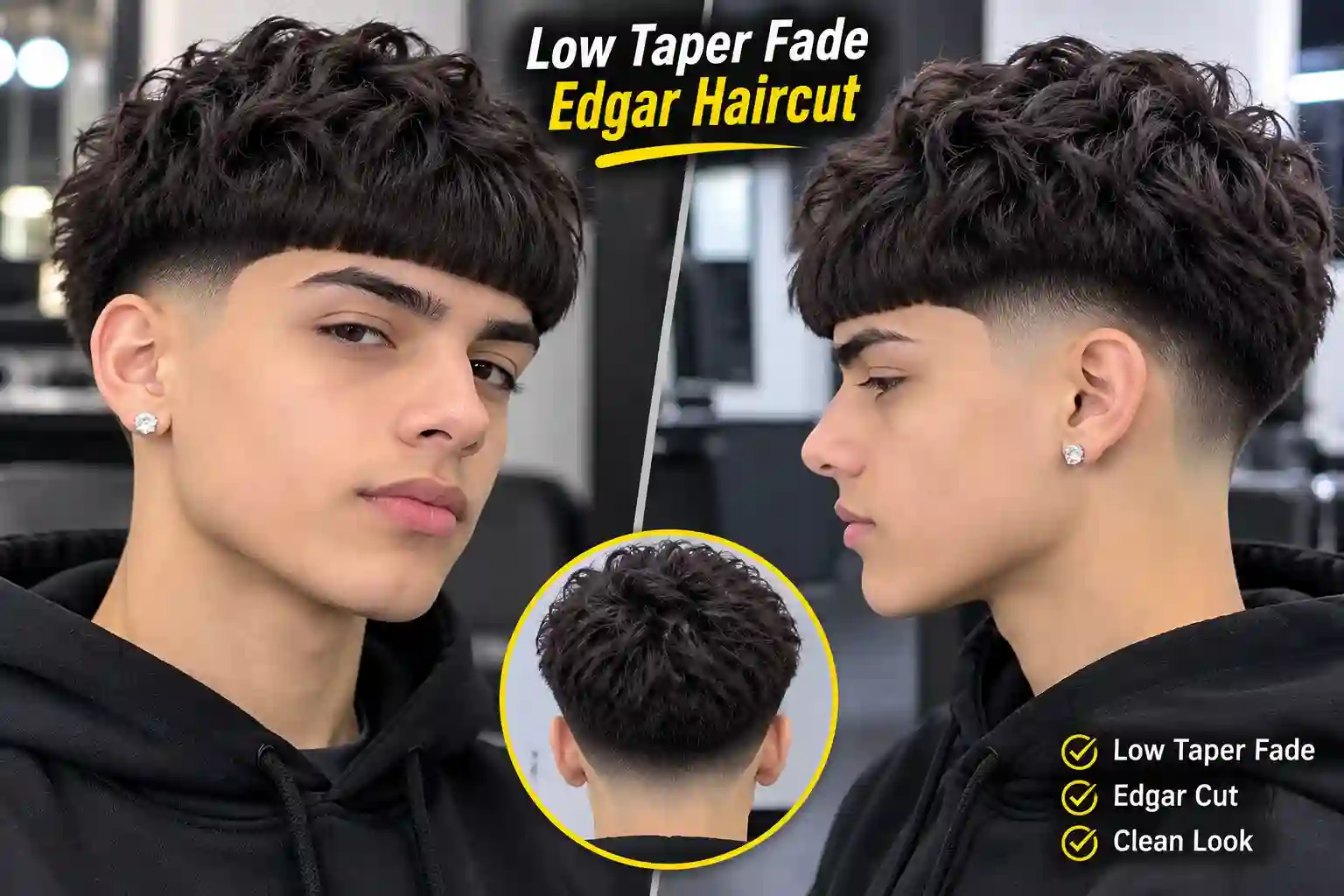
The low taper fade Edgar haircut is a popular hairstyle that combines a sharp front fringe with a clean, gradual fade around the ears and neckline. It offers a modern appearance without removing too much hair from the sides. This haircut works with different hair textures, including straight, wavy, thick, and curly hair.
One reason people like the low taper fade Edgar is its flexibility. You can choose a classic look, a fluffy top, a textured fringe, or a design at the back. It can also be adjusted for different face shapes and personal styles.
In this guide, you will learn about different low taper fade Edgar haircut styles, how to choose the right one, what to tell your barber, and how to maintain your haircut at home.
What Is a Low Taper Fade Edgar Haircut?
A low taper fade Edgar haircut combines the traditional Edgar cut with a low taper around the sideburns and neckline. The top usually has short or medium-length hair with a straight, forward-facing fringe.
The low taper gradually reduces the hair length near the ears and lower back of the head. Unlike a high fade, it does not remove much hair from the upper sides.
The Edgar haircut is known for its structured shape and defined fringe. The low taper adds a cleaner finish while keeping the overall hairstyle balanced.
30 Best Low Taper Fade Edgar Haircut Ideas
There are many ways to customize an Edgar cut with a low taper. Here are some popular options to consider before visiting your barber.

1. Classic Low Taper Fade Edgar
The classic low taper fade Edgar features a straight fringe, a short textured top, and a gradual taper around the ears. It is a simple option for people who want the traditional Edgar appearance.
2. Fluffy Edgar Low Taper Cut
The fluffy Edgar low taper cut has a fuller and softer top. The hair is styled with natural volume instead of being pressed flat. A lightweight volume mousse or texture powder can help create this look.
3. Textured Edgar Haircut
A textured Edgar haircut uses layers and point cutting to create movement across the top. It is a good choice for men who do not want their hair to look too flat or perfectly straight.
4. Low Taper Fade Edgar Haircut for Straight Hair
Straight hair makes it easier to create a clean and defined fringe. Your barber can add light texture to the top while keeping the front section neat. A small amount of matte clay can help maintain the shape.
5. Low Taper Fade Edgar Haircut for Curly Hair
Curly hair gives the Edgar haircut a fuller appearance. The curls add natural volume to the top, while the low taper keeps the sides and neckline clean. Curl cream or leave-in conditioner can help control dryness and maintain curl definition.
6. Wavy Edgar with Low Taper
A wavy Edgar combines a defined front fringe with natural movement. It works well for people who want a less structured appearance than the classic Edgar. Sea salt spray can help enhance the natural texture.
7. Messy Edgar Haircut
The messy Edgar has an uneven and relaxed top with a slightly textured fringe. It is suitable for people who prefer a casual hairstyle. Matte paste can provide flexible hold without making the hair look overly shiny.
8. Short Low Taper Fade Edgar
A short Edgar keeps the top close to the head and the fringe relatively short. It is easier to style and maintain than longer variations. This haircut is a practical option for people who prefer simple grooming.
9. Long Top Edgar Haircut
The long top Edgar leaves extra length above the head while keeping the sides tapered. The additional length gives you more styling choices, including a fluffy finish, textured layers, and added volume.
10. Low Taper Fade Edgar Haircut with Design
A low taper fade Edgar haircut with design adds a creative detail to the sides or back. You can choose a simple line, a curved pattern, or a small geometric design. Keep the design subtle if you prefer a clean and balanced appearance.
11. Mexican Edgar Haircut with Low Taper
The Mexican Edgar haircut is associated with a bold, structured fringe and a defined top. A low taper creates a softer transition around the ears and neckline. You can choose a straight fringe or a slightly textured version depending on your hair type.
12. Takuache Edgar Haircut
The Takuache haircut is a recognizable variation of the Edgar style. It usually features a strong straight fringe, short sides, and a noticeable shape around the top. A low taper gives it a more gradual finish around the lower sides.
13. Low Taper Edgar with Blonde Hair
Blonde hair can make the texture of an Edgar haircut more noticeable. You can choose a natural blonde shade or add highlights to the top. A low taper keeps the overall style neat and allows the lighter hair to stand out.
14. Edgar with a Skin Taper
A skin taper gradually blends the hair down to bare skin near the sideburns and neckline. It creates a sharper finish than a regular low taper. This variation is suitable for people who like a clean and noticeable transition.
15. Edgar Haircut with Beard
Combining an Edgar haircut with a beard creates a balanced appearance between the top and lower face. A barber can clean up the sideburns and blend them into the beard. Keep the beard shape suitable for your face structure.
16. Edgar with a Hard Part
A hard part is a shaved line that separates sections of hair. Adding one to a low taper Edgar creates a more defined appearance. It works best when the design is placed carefully without distracting from the front fringe.
17. Caesar Fringe Edgar
The Caesar fringe Edgar combines a short forward fringe with the structured shape of an Edgar haircut. It is a good option for people who prefer a shorter front section and a simple top.
18. Edgar Crop
An Edgar crop has a short, textured top with a defined fringe. The barber can use point cutting to create small layers and natural movement. It is particularly suitable for straight and thick hair.
19. Spiky Edgar Haircut
The spiky Edgar adds short spikes to the top while keeping the front fringe visible. A small amount of matte wax can help create separation and flexible hold.
20. Blowout Edgar Haircut
The blowout Edgar combines volume at the top with a forward-facing fringe. A blow dryer and round brush can help lift the hair around the crown. The low taper keeps the sides neat.
21. Buzz Cut Edgar
The buzz cut Edgar has a very short top with a small defined fringe. It is a simple option for people who prefer shorter hair and minimal daily styling.
22. Mullet Edgar
The mullet Edgar combines a short fringe with additional length at the back. The low taper creates a cleaner transition around the sides while allowing the rear section to remain longer.
23. Permed Edgar
A permed Edgar adds curls and volume to the top. It can be useful for people who want a curly appearance but naturally have straight hair. Curl cream can help maintain the shape and reduce frizz.
24. Low Taper Edgar for Thick Hair
Thick hair provides natural fullness and makes it easier to create a structured top. Your barber can remove some weight through texturing while keeping the fringe defined.
25. Low Taper Edgar for Fine Hair
Fine hair can look fuller with shorter layers and lightweight styling products. Texture powder or volume mousse can add lift without making the hair feel heavy.
26. Low Taper Edgar for Coily Hair
Coily hair creates a naturally full and defined top. The low taper provides a clean outline around the ears and neckline. Your barber should consider how much the hair shrinks when it dries before deciding on the fringe length.
27. Edgar Haircut for Asian Hair
Straight and thick Asian hair can work well with a low taper Edgar. A gradual taper and textured top can help control hair that naturally sticks out around the sides.
28. Low Taper Edgar with Curved Fringe
A curved fringe is a softer alternative to the traditional straight Edgar front. The slight curve follows the natural shape of the forehead and gives the haircut a different appearance.
29. Low Taper Edgar with Back Design
A back design adds detail to the lower rear section of the haircut. Options include simple lines, geometric patterns, and curved shapes. Keep the rest of the haircut simple so the design remains noticeable.
30. Natural Texture Edgar
The natural texture Edgar focuses on your original hair pattern instead of creating a perfectly smooth finish. It works with straight, wavy, and curly hair. A little styling cream can help maintain the shape.
Low Taper Fade Edgar Haircut for Females
The low taper fade Edgar haircut is not limited to men. Women who like short, bold hairstyles can also choose this look.

A female Edgar haircut can feature a straight fringe, textured top, and a low taper around the ears and neckline. Some people prefer a soft and fluffy version, while others choose a sharper fringe and more defined sides.
For a softer appearance, keep the top slightly longer and add natural texture. For a bold style, choose a shorter fringe and a more noticeable taper. The final result should match your hair texture, face shape, and personal preference.
Low Taper Fade Edgar vs. Other Fade Styles
The type of fade you choose changes the overall appearance of your Edgar haircut.
Low Taper vs. Mid Taper Edgar
A low taper starts around the sideburns and neckline. A mid taper begins higher around the temple area.
A low taper creates a softer finish, while a mid taper gives the haircut more contrast. Choose the low taper if you want to keep more hair around the sides.
Low Taper vs. High Fade Edgar
A high fade starts higher on the sides and removes more hair around the upper head. It creates a stronger contrast between the top and sides.
A low taper keeps the transition closer to the ears and neckline. It is a good option if you want a balanced and less dramatic haircut.
Low Taper vs. Skin Fade Edgar
A regular low taper gradually shortens the hair but may leave some hair around the lowest section. A skin fade blends the hair down to bare skin.
A skin taper looks sharper and may need more frequent maintenance.
Low Taper vs. Burst Fade Edgar
A burst fade curves around the ears in a semicircular shape. A low taper focuses on the sideburns and neckline instead. Both can create different looks when combined with an Edgar fringe.
Low Taper vs. Drop Fade Edgar
A drop fade follows the natural curve of the head and drops lower behind the ears. It creates a curved transition toward the back, while a low taper keeps the fade concentrated around the lower sides and neckline.

Edgar Haircut vs. Low Taper Fade: What Is the Difference?
An Edgar haircut and a low taper fade are not exactly the same thing.
The Edgar is the main haircut style. It is recognized by its short or medium top and forward-facing fringe.
A low taper fade is a barbering technique used to gradually shorten the hair around the sideburns and neckline.
You can combine both techniques to create an Edgar haircut with a low taper fade. This combination keeps the front structured while giving the sides a clean finish.
What Is a Dark Fade Haircut?
A dark fade haircut usually refers to a fade that keeps more visible hair above the shortest section, creating a darker appearance along the sides. The term can also be used informally to describe a fade with a noticeable contrast between the short and longer sections.
It is not a separate fade technique with one fixed definition. If you want a darker appearance with an Edgar, ask your barber to leave more weight above the taper instead of blending too high.
How to Choose the Best Low Taper Fade Edgar for Your Face Shape
Your face shape can help you choose the right fringe length and top volume.
Round Face
A textured top can add visual height and make the face appear more balanced. Avoid making the fringe excessively wide if you want to create a longer-looking appearance.
Oval Face
An oval face can work with many Edgar variations. You can choose a classic fringe, fluffy top, or textured crop based on your personal style.
Square Face
A textured fringe and balanced top can complement a square face. A low taper keeps the sides neat without creating too much contrast.
Long Face
A fuller fringe can help balance the appearance of a longer face. Avoid adding too much height to the top if you want a more proportionate look.
Heart-Shaped Face
A slightly textured top and balanced fringe can work well with a heart-shaped face. Ask your barber to avoid making the sides excessively short if you prefer a softer appearance.
How to Choose the Right Edgar Haircut for Your Hair Type
Your natural hair texture affects how the haircut looks after styling.

- Straight hair: A classic or textured Edgar can create a sharp fringe.
- Wavy hair: A fluffy or messy Edgar can enhance natural movement.
- Curly hair: A curly Edgar provides volume and a fuller top.
- Coily hair: A structured top with a carefully shaped fringe can create a bold appearance.
- Thick hair: Textured layers can reduce extra weight.
- Fine hair: Shorter layers and lightweight products can help add volume.
If you have a cowlick near the front, tell your barber before cutting the fringe. A cowlick can make the hair grow in a different direction and affect how the front section sits.
How to Ask Your Barber for a Low Taper Fade Edgar
Clear instructions can help your barber understand the haircut you want.
You can say:
“I want an Edgar haircut with a low taper fade. Keep the fringe straight and defined, add some texture to the top, and gradually taper the hair around my sideburns and neckline. Please keep the fade low and do not take too much length off the top.”
You can also show a reference picture from the front, side, and back. This helps the barber understand the fringe length, taper height, and overall shape.
If you want a design, explain where you want it placed before the haircut begins.
How to Cut a Low Taper Fade Edgar Haircut
A professional barber usually follows several steps to create this haircut.
Step 1: Prepare the Hair
The barber checks the hair texture, growth direction, thickness, and desired top length. The hair is combed and sectioned before cutting.
Step 2: Create the Low Taper
The barber starts around the sideburns and lower neckline. Clipper guards help control the length and create a gradual transition.
Step 3: Blend the Sides
Different clipper guard lengths are used to blend the short lower section into the fuller hair above it. The goal is to avoid visible lines between different lengths.
Step 4: Shape the Top
The top is trimmed according to the chosen Edgar variation. Scissors can be used to add layers and texture.
Step 5: Create the Fringe
The barber shapes the front section into a straight or slightly curved fringe. The length should suit the hair texture and forehead shape.
Step 6: Finish the Haircut
The barber cleans the sideburns, neckline, and hairline. A line up may be added if you want sharper edges.
Step 7: Style the Hair
The hair is dried and styled with a suitable product. Matte clay, texture powder, or styling cream can help create the desired finish.
Low Taper Fade Edgar Clipper Guard Numbers

Clipper guard numbers help control how much hair remains after cutting.
| Clipper Guard | Common Use |
| Zero guard | Very short lower section |
| Number 1 | Short hair near the bottom of the taper |
| Number 2 | Slightly longer transition |
| Number 3 | Blending into fuller side hair |
| Number 4 | Shorter and more uniform sections |
These are general examples, not fixed instructions for every haircut. The exact guard choice depends on your hair density, desired finish, and barber’s technique.
Best Styling Products for a Low Taper Fade Edgar
The right styling product helps you maintain your preferred Edgar appearance.
| Product | Main Benefit | Best For |
| Matte clay | Strong hold with little shine | Thick and straight hair |
| Texture powder | Adds grip and volume | Fine hair |
| Matte paste | Flexible texture | Messy Edgar |
| Hair wax | Helps define spikes | Spiky Edgar |
| Sea salt spray | Enhances natural texture | Wavy hair |
| Styling cream | Softens and controls hair | Everyday styling |
| Light pomade | Creates a smoother finish | Neat Edgar styles |
| Volume mousse | Adds lift and fullness | Fluffy Edgar |
| Curl cream | Defines curls | Curly and coily hair |
| Leave-in conditioner | Helps maintain softness | Dry and textured hair |
Start with a small amount of product. Using too much can make the hair look heavy and reduce its natural movement.
How to Style a Low Taper Fade Edgar at Home
You do not need a complicated routine to style an Edgar haircut.
- Start with clean, slightly damp hair.
- Comb the top forward to create the fringe.
- Use a blow dryer if you want extra volume.
- Apply a small amount of suitable styling product.
- Use your fingers or a comb to shape the top.
- Adjust the fringe and check the sides.
- Finish with a light hold if needed.
For a fluffy Edgar, use a volume mousse and avoid pressing the top flat. For a textured Edgar, use matte paste to separate small sections of hair.
How to Maintain a Low Taper Fade Edgar Haircut
Regular maintenance keeps the haircut looking neat.
- Trim the taper when the sides begin to lose their shape.
- Keep the fringe at your preferred length.
- Wash your hair according to your hair type.
- Use conditioner when your hair feels dry.
- Avoid applying too much styling product.
- Visit your barber regularly for a cleanup.
- Use suitable products for your natural hair texture.
Many people prefer a touch-up every two to four weeks, but the right schedule depends on how quickly their hair grows and how sharp they want the fade to look.
How Does a Low Taper Edgar Haircut Grow Out?
As the hair grows, the taper gradually becomes less defined and the fringe gets longer.
During the first week, the haircut usually has its sharpest shape. After two weeks, the sides may look fuller and the fringe may begin to cover more of the forehead.
After three or four weeks, the neckline and sideburns may need a cleanup. If you want to keep the original shape, regular trims can help maintain the haircut.
Common Mistakes to Avoid
Avoid these mistakes when getting or maintaining a low taper fade Edgar:
- Choosing a fringe that does not suit your hair growth direction.
- Asking for a high fade when you actually want a low taper.
- Cutting too much length from the top.
- Ignoring natural curls, waves, or cowlicks.
- Using too much heavy styling product.
- Choosing a back design that makes the haircut look unbalanced.
- Not showing your barber a reference picture.
- Waiting too long between trims if you prefer a sharp finish.
A good haircut should work with your natural hair texture instead of requiring constant effort to control it.
Is the Low Taper Fade Edgar Good for School, Sports and Work?
The low taper fade Edgar can be adjusted for different everyday situations.

For School and College
A shorter Edgar with a subtle taper can create a neat appearance. Check your school’s grooming rules before choosing a design or an especially sharp fringe.
For Professional Work
A softer Edgar with a natural fringe and subtle low taper can create a more understated appearance. Avoid excessive designs if you prefer a traditional workplace style.
Frequently Asked Questions
Yes. It is a popular option for men who want a defined fringe with clean sides. The haircut can be customized with different top lengths, textures, and fade details.
Yes. Curly hair can create a fuller Edgar style. Ask your barber to consider curl shrinkage when choosing the fringe length.
Yes. A classic Edgar usually has a more structured top and defined fringe. A fluffy Edgar has extra volume, softer texture, and a less rigid appearance.
Yes. Women who prefer short and bold hairstyles can choose a low taper Edgar. The fringe, top length, and taper can be adjusted to create a softer or sharper appearance.
An Edgar cut is a hairstyle with a recognizable front fringe and structured top. A taper fade is a cutting technique that gradually reduces hair length around the sideburns and neckline. They can be combined in one haircut.
There is no single guard number for every low taper. Barbers often combine different guard lengths to create a smooth transition. The exact numbers depend on the desired finish and hair length.
The haircut may keep its general shape for several weeks, but the fade becomes less sharp as the hair grows. Many people get a cleanup every two to four weeks.
Yes. A low taper Edgar can look balanced with a short or full beard. Ask your barber to blend the sideburn area into the beard for a cleaner finish.
A low taper is better if you prefer a subtle transition around the ears and neckline. A high fade is suitable if you want stronger contrast and shorter sides.
Use a lightweight volume mousse or texture powder. Dry the top with a blow dryer while lifting the hair gently with your fingers. Avoid heavy products that flatten the hairstyle.
Yes. You can add simple lines, geometric shapes, or curved patterns to the back.
Final Thoughts
The low taper fade Edgar haircut is a flexible hairstyle that combines a defined fringe with a clean and gradual taper. You can choose a classic Edgar, fluffy top, curly variation, textured crop, Mexican Edgar, or a design at the back.
The best option depends on your hair texture, face shape, preferred length, and daily styling routine.

Ryan Mitchell is a men’s haircut and grooming writer who focuses on fades, tapers, modern haircut styles, and barbering techniques. He enjoys breaking down different cuts in simple terms so readers can understand how a style works with their hair type, face shape, and personal look. His guides also cover styling, maintenance, and useful tips to help readers get better results at the barbershop.
