


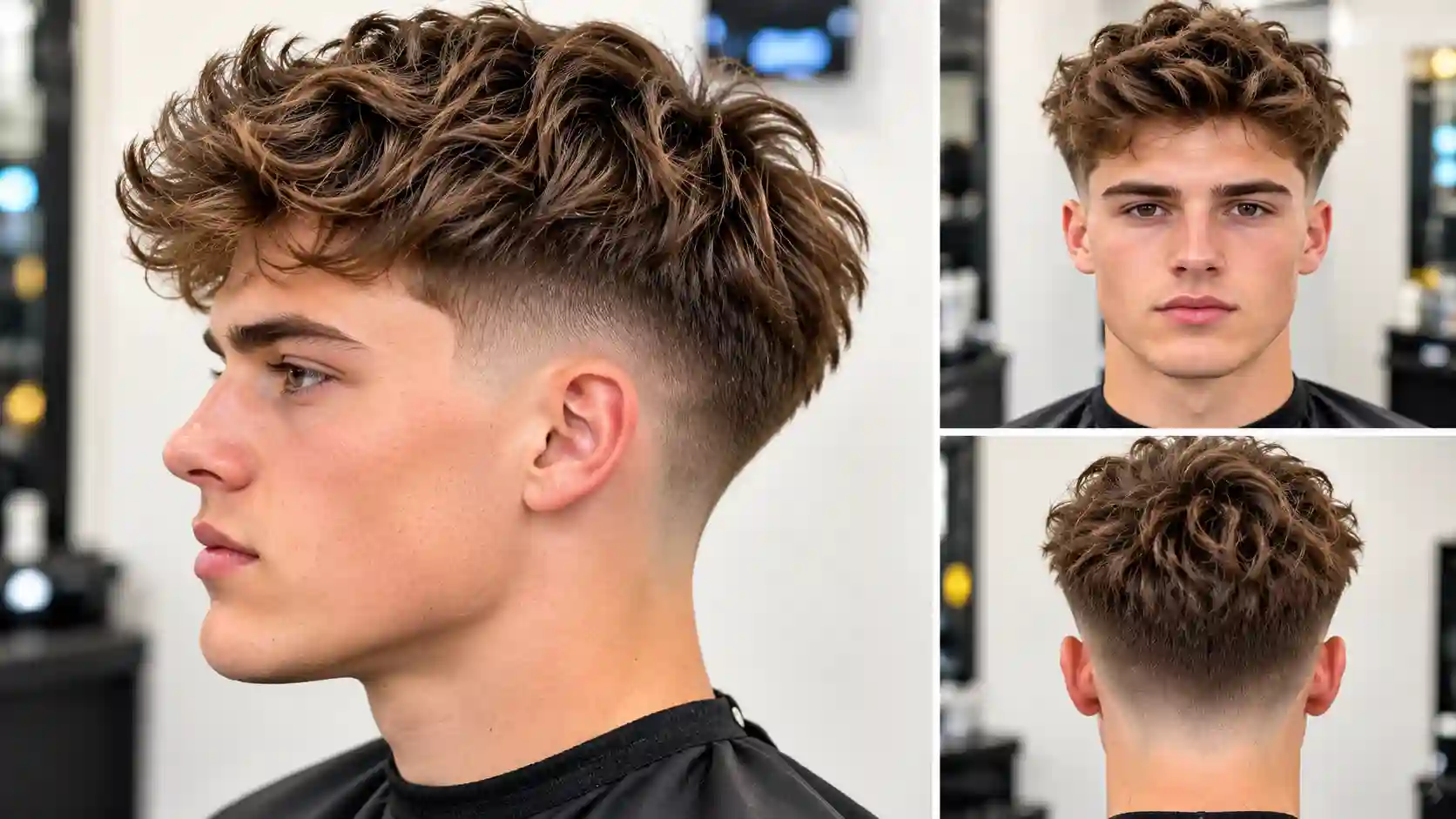
A taper fade is a clean and stylish haircut that works well for many white men. It keeps the hair shorter around the sides and back while leaving more length on top. You can choose a low, mid, or high taper depending on your preferred look.
Whether you have straight, curly, wavy, thick, or fine hair, there is a taper fade style that can suit you. You can also combine it with a slick back, textured fringe, middle part, quiff, or messy hairstyle.
In this guide, you will discover 25 popular taper fade haircuts for white males, learn how to choose the right style, and find helpful tips for explaining your haircut to a barber.
What Is a Taper Fade?
A taper fade is a haircut in which the hair gradually becomes shorter around the sides and back. The change in length creates a smooth blend between the longer hair on top and the shorter hair near the ears and neckline.
A traditional taper usually keeps more hair around the sides, while a taper fade creates a shorter and more noticeable blend.
The haircut can be adjusted to match different hair lengths, textures, and face shapes. You can also choose how high or low the fade starts.
25 Best Taper Fade Haircuts for White Males
Here are 25 popular taper fade styles to consider for your next haircut.

1. Low Taper Fade
A low taper fade starts just above the ears and follows the natural hairline around the back. It creates a clean appearance without removing too much hair from the sides.
This style is a good choice if you want a simple haircut for school, work, or everyday activities. You can pair it with short, medium, or longer hair on top.
2. Low Taper Fade for Straight Hair
Straight hair works well with a low taper because it creates a neat contrast between the sides and top.
You can keep the top short for an easy routine or leave it longer for a side part, slick back, or textured style. A small amount of matte clay can help add texture without making the hair look greasy.
3. Low Taper Fade for Curly Hair
A low taper fade with curly hair keeps the natural curls visible while making the sides look clean.
The barber can remove extra bulk around the ears and neckline without cutting too much from the top. Use curl cream to control frizz and help your curls keep their natural shape.
4. Mid Taper Fade
A mid taper fade begins around the middle of the sides. It creates a balance between a low and high taper.
This haircut works with many hairstyles, including textured crops, quiffs, slick backs, and curly tops. It is a useful option if you want a noticeable but balanced fade.
5. Mid Taper Fade for Straight Hair
A mid taper fade for straight hair gives the haircut a sharp and organized finish.
You can style the top forward, backward, or to one side. Adding light texture can make straight hair look fuller and more natural.
6. Taper Fade for White Hair
White hair can refer to naturally white, silver, or very light-colored hair. A taper fade can create a clean shape while allowing the natural color to stand out.
A low or mid taper is a good starting point. Keep enough length on top to show the texture and movement of your hair.
7. High Taper Fade
A high taper fade starts higher on the sides and creates a stronger contrast between the top and the shorter sections.
It is a good choice if you prefer a bold haircut with a clean finish. You can combine it with a short crop, textured top, or longer hairstyle.
8. Mid Taper Fade with a Textured Top
This style combines a balanced mid taper with a top that has movement and texture.
Ask your barber to leave enough length on top and use scissors or point cutting to create a natural finish. Matte clay or styling paste can help separate the hair.
9. Taper Fade with Puff
A taper fade with a puff keeps volume at the front or top while cleaning up the sides.
It works especially well for men who like fuller hairstyles. A blow dryer and light styling product can help create volume without making the hair stiff.
10. Taper Fade with Textured Fringe
A textured fringe brings the hair forward over the forehead. The taper fade keeps the sides neat and makes the top stand out.
This haircut can work with straight, wavy, or slightly curly hair. Ask your barber for a natural fringe rather than a perfectly straight line if you prefer a relaxed appearance.
11. Slick Back Taper Fade
The slick back taper fade combines a neat back-swept top with shorter sides.
It is a good option for medium-length hair. Use a comb and a small amount of pomade or styling cream to move the hair backward.
For a softer finish, choose a matte product instead of a high-shine product.
12. Middle Part Taper Fade
A middle part taper fade keeps the hair divided into two sections from the center of the head.
The longer top creates movement around the forehead, while the taper keeps the sides tidy. This style is especially suitable for straight and wavy hair.
13. Quiff Taper Fade
A quiff taper fade adds height at the front of the hair. The sides are gradually shortened to create a clean outline.
You can use a blow dryer and a light styling product to lift the front. This haircut is useful for men who want volume without keeping their entire hairstyle long.
14. Side Part Taper Fade
A side part taper fade is a classic haircut that works for casual and formal settings.
The hair is divided to one side, creating a neat and organized appearance. Ask your barber to follow your natural parting if you want the style to be easy to maintain.
15. Messy Taper Fade
A messy taper fade keeps the top loose and textured instead of perfectly combed.
It is a good choice if you prefer a relaxed hairstyle. Apply a small amount of matte clay or paste and use your fingers to shape the hair.
16. Pompadour Taper Fade
A pompadour taper fade features longer hair at the front that is lifted and styled backward.
The taper makes the sides look cleaner while the top provides height and volume. This style usually works best with medium or thick hair.
17. French Crop Taper Fade
A French crop has a short top with a forward fringe. The taper fade gives the sides a smooth and clean finish.
It is a practical haircut for men who want something easy to style. You can use a little matte paste to add texture to the top.
18. Spiky Taper Fade
A spiky taper fade combines short, pointed sections of hair with clean sides.
You can keep the spikes soft and natural or make them more defined with styling paste. This style works well with short and medium-length hair.
19. Wavy Taper Fade
A wavy taper fade allows your natural waves to remain visible while reducing extra hair around the sides.
A low or mid taper can help maintain a balanced shape. Use a light cream or mousse to control frizz and keep the waves looking natural.
20. Long Top Taper Fade
This haircut keeps more length on top and gradually shortens the sides and back.
You can style the longer hair in several ways, including a middle part, slick back, quiff, or messy look. Regular trims help prevent the top from becoming difficult to manage.
21. Crew Cut Taper Fade
A crew cut taper fade combines a short top with gradually shorter sides.
It is a simple and practical haircut for men who do not want to spend much time styling their hair. A low taper gives it a softer finish, while a higher taper creates more contrast.
22. Caesar Cut Taper Fade
A Caesar cut has short hair on top with a small forward fringe.
The taper fade gives the haircut a cleaner shape around the ears and neckline. It can be a good option for straight or slightly wavy hair.
23. Blowout Taper Fade
A blowout taper fade creates volume and movement at the top while keeping the sides neat.
A blow dryer helps lift the hair and create a fuller appearance. You can use a lightweight styling product to keep the shape in place.
24. Faux Hawk Taper Fade
A faux hawk taper fade brings the hair toward the center of the head to create a raised shape.
Unlike a traditional mohawk, it does not require shaving the sides completely. The taper keeps the haircut more balanced and suitable for everyday wear.
25. Natural Texture Taper Fade
A natural texture taper fade works with your hair’s natural pattern instead of forcing it into a specific shape.
It can suit straight, wavy, and curly hair. Ask your barber to preserve your natural texture and remove only the extra bulk around the sides.
Different Types of Taper Fades
Not every taper fade looks the same. The main difference is where the gradual shortening begins.

Low Taper Fade
A low taper begins close to the ears and neckline. It creates a subtle finish and keeps more hair on the sides.
Mid Taper Fade
A mid taper begins around the middle of the sides. It provides a balanced appearance and works with many hairstyles.
High Taper Fade
A high taper begins higher on the sides. It creates more contrast and gives the haircut a bolder look.
Shadow Taper
A shadow taper keeps some visible hair near the shortest part of the fade. Instead of creating a completely bare finish, it produces a soft, shaded appearance.
Temple Taper
A temple taper focuses on the hair around the temples. It cleans up the front sides of the head while keeping more length elsewhere.
Burst Taper
A burst taper creates a rounded fade around the ear. It is often paired with curly tops, textured hairstyles, or a faux hawk.
Neck Taper
A neck taper focuses on the hairline at the back of the neck. It creates a clean finish without necessarily changing the entire side of the haircut.
Taper Fade vs. Skin Fade vs. Regular Taper
These haircuts may look similar, but they create different finishes.
| Haircut | Main Feature | Overall Look |
| Taper fade | Gradual shortening around the sides and back | Clean and blended |
| Skin fade | Hair fades down to bare skin | Sharp and high contrast |
| Regular taper | Hair gradually gets shorter but usually stays longer | Natural and classic |
Choose a taper fade if you want a smooth blend without exposing too much skin. A skin fade is better if you prefer a very short finish. A regular taper is suitable if you want a softer and more traditional haircut.
Taper Height vs. Fade Closeness
Taper height and fade closeness are two different things.
- Taper height describes where the fade begins.
- Fade closeness describes how short the hair becomes at the bottom.
For example, you can ask for a low skin taper or a high taper that leaves some hair visible. Explaining both details helps your barber understand the finish you want.
Best Taper Fade for Different Hair Types
Your hair texture and thickness can affect how a taper fade looks.

Straight Hair
Straight hair works well with low, mid, and high tapers. You can choose a slick back, side part, middle part, or textured fringe.
Curly Hair
Curly hair often looks good with a low or mid taper. Keeping enough length on top allows your curls to remain visible.
Wavy Hair
A taper fade can make natural waves look more organized. A middle part or messy top can work well with this texture.
Thick Hair
Thick hair can create a fuller appearance on top. Ask your barber to remove extra bulk where needed while keeping the shape balanced.
Fine or Thin Hair
A low taper with a short or textured top can help create a neat appearance. Avoid removing too much hair if you want to maintain the appearance of fullness.
Best Taper Fade for Different Face Shapes
Your face shape can help you choose a haircut that creates a balanced appearance.
Oval Face
An oval face can work with many taper styles. Low, mid, and high tapers are all worth considering.
Round Face
A little height on top can make a round face appear longer. A mid or high taper with a quiff or textured top may work well.
Square Face
A square face has a strong jawline. A low or mid taper can complement its natural shape.
Long Face
A low taper with some width and texture on top can create a balanced appearance. Avoid adding too much height if you do not want to make your face look longer.
Heart-Shaped Face
A textured fringe or medium-length top can help balance a wider forehead and narrower chin. A low taper is a good option to consider.
These are general suggestions. Your personal preference, hair growth, and natural features matter more than following a strict face-shape rule.
Clipper Guard Sizes for a Taper Fade
Barbers use clipper guards to control hair length. The exact measurements can vary slightly by clipper brand.

| Guard Number | Approximate Hair Length |
| #0 | No guard; very short cut |
| #1 | 3 mm |
| #2 | 6 mm |
| #3 | 10 mm |
| #4 | 13 mm |
| #5 | 16 mm |
| #6 | 19 mm |
A barber may use different guards and blending techniques to create a smooth transition. You do not need to choose every guard number yourself. It is usually easier to explain the overall look you want and show a reference photo.
How to Explain a Taper Fade to Your Barber
Clear instructions can help you get the haircut you want.
Follow these steps:
- Tell your barber whether you want a low, mid, or high taper.
- Explain how short you want the sides and back.
- Tell them how much length you want to keep on top.
- Describe your preferred hairstyle, such as a slick back, middle part, or textured fringe.
- Explain whether you want a natural neckline or a sharper finish.
- Show a reference photo that matches your desired haircut.
You can also tell your barber if you have a cowlick, uneven hair growth, or a receding hairline. These details can affect the final shape.
How Is a Taper Fade Haircut Done?
A barber usually follows several steps to create a smooth taper fade.
Step 1: Prepare the Hair
The barber checks your hair texture, length, growth direction, and preferred style.
Step 2: Choose the Fade Height
The barber decides where the taper should begin based on whether you want a low, mid, or high finish.
Step 3: Shorten the Sides
Clippers are used to remove extra hair around the sides and back.
Step 4: Create the Blend
Different clipper lengths and blending techniques help create a gradual transition between longer and shorter hair.
Step 5: Shape the Edges
The barber cleans the areas around the temples, sideburns, ears, and neckline.
Step 6: Style the Top
The top is trimmed and styled according to your preferred look.
A good taper fade should look balanced from the front, sides, and back.
Common Taper Fade Mistakes to Avoid
A taper fade can look different from what you expected if the haircut is not explained clearly.
Avoid these common mistakes:
- Choosing a high taper when you wanted a subtle low taper.
- Asking for a skin fade when you prefer some hair to remain visible.
- Cutting too much length from the top.
- Ignoring your natural hair texture.
- Choosing a style that requires more daily styling than you want.
- Not showing your barber a reference photo.
- Waiting too long between trims when you want a sharp finish.
Always explain the details before the barber starts cutting.
Taper Fade for Cowlicks and Receding Hairlines
A cowlick is an area where hair grows in a different direction from the surrounding hair. It can make certain sections difficult to style.
A barber can work with the natural growth pattern instead of cutting against it. Keeping suitable length around the affected area may help the hairstyle sit more naturally.
For a receding hairline, a textured top, short crop, or natural side part may create a balanced look. A taper fade can keep the sides clean without requiring a dramatic change to the front hairline.
Best Styling Products for a Taper Fade
The right product depends on your hair type and the style you want.
| Product | Best For |
| Matte clay | Texture and a natural finish |
| Styling paste | Flexible hold and separation |
| Pomade | Slick and polished hairstyles |
| Hair cream | Soft control and light styling |
| Mousse | Volume and movement |
| Curl cream | Defining natural curls |
| Hair spray | Helping a finished style stay in place |
Start with a small amount of product. You can add more if needed, but using too much can make your hair look heavy or greasy.
How to Style a Taper Fade at Home
You do not need a complicated routine to style your haircut.
For Straight Hair
Wash your hair and towel-dry it gently. Use a small amount of matte clay or styling paste. Comb the hair into your preferred direction or use your fingers for a textured finish.
For Curly Hair
Apply curl cream to slightly damp hair. Use your fingers to shape the curls and let them dry naturally or use a diffuser on a low setting.
For Wavy Hair
Apply a lightweight styling cream or mousse. Use your fingers to create natural movement without making the waves look stiff.
For a Slick Back
Apply a suitable styling product to slightly damp hair. Comb it backward and use a blow dryer if you need extra control or volume.
How Often Should You Get a Taper Fade?
The time between haircuts depends on how sharp you want your fade to look and how quickly your hair grows.
- Every 1–2 weeks: If you prefer very sharp edges and a fresh finish.
- Every 2–3 weeks: A common schedule for keeping the taper neat.
- Every 3–4 weeks: If you prefer a softer, more grown-out appearance.
You do not need to follow a strict schedule. Book your next haircut when the sides and neckline no longer have the shape you want.
How Much Does a Taper Fade Cost?
The cost of a taper fade depends on the barber, salon, location, and service quality.
A basic haircut may cost less than a detailed fade with extra styling. Experienced barbers or premium salons may charge more.
Before booking, ask about the price and whether the service includes washing, styling, or beard trimming.
How to Keep Your Scalp Comfortable After a Taper Fade
Very short haircuts can sometimes cause temporary redness, irritation, or razor bumps, especially if your skin is sensitive.
To keep your scalp comfortable:
- Avoid scratching freshly trimmed areas.
- Keep your scalp clean.
- Do not use harsh products on irritated skin.
- Avoid very close shaving if it regularly causes bumps.
- Ask your barber to use clean tools.
- Tell your barber if you experience irritation after a skin-close finish.
If you develop painful, persistent, or spreading bumps, consult a healthcare professional rather than trying to treat the problem with random products.
Frequently Asked Questions
A low or mid taper fade is a good starting point because both styles work with many hair types and hairstyles. The best option depends on your personal preference and the look you want.
Yes. A low taper fade creates a clean and natural appearance. It works with straight, wavy, and curly hair.
Low, mid, and high tapers can all work with straight hair. A side part, slick back, or textured fringe can make the haircut look more interesting.
Yes. A curly taper fade keeps the curls on top while cleaning up the sides and back. A low or mid taper is a popular option.
Yes. A curly taper fade keeps the curls on top while cleaning up the sides and back. A low or mid taper is a popular option.
Neither is always better. A high taper creates more contrast, while a low taper gives a softer and more subtle finish. Choose the one that matches your preferred style.
Yes. You can keep long hair on top and combine it with a low, mid, or high taper. A middle part, slick back, or messy style can work well.
A taper fade with a puff keeps volume at the front or top of the head while gradually shortening the sides. It creates a fuller hairstyle with a clean outline.
A taper fade often looks sharp for around one to three weeks, depending on hair growth and how short the sides are. Some people prefer more frequent trims.
Yes. You can ask a local barber for a low, mid, or high taper fade. Showing a clear reference photo can help explain the exact style you want.
Yes. A low taper with a short, textured top can create a neat appearance. Ask your barber to avoid removing too much hair from the top.
Tell your barber the taper height, the length you want on top, and whether you prefer a natural or sharp neckline. A reference photo can make your instructions clearer.
Final Thoughts
A taper fade is a versatile haircut for white males because it can work with different hair textures, lengths, and personal styles. You can choose a low taper for a subtle finish, a mid taper for a balanced look, or a high taper for more contrast.
From a curly taper fade to a slick back, middle part, or textured fringe, there are many ways to make this haircut your own. Consider your hair type, face shape, and daily routine before choosing a style.

Ryan Mitchell is a men’s haircut and grooming writer who focuses on fades, tapers, modern haircut styles, and barbering techniques. He enjoys breaking down different cuts in simple terms so readers can understand how a style works with their hair type, face shape, and personal look. His guides also cover styling, maintenance, and useful tips to help readers get better results at the barbershop.
