


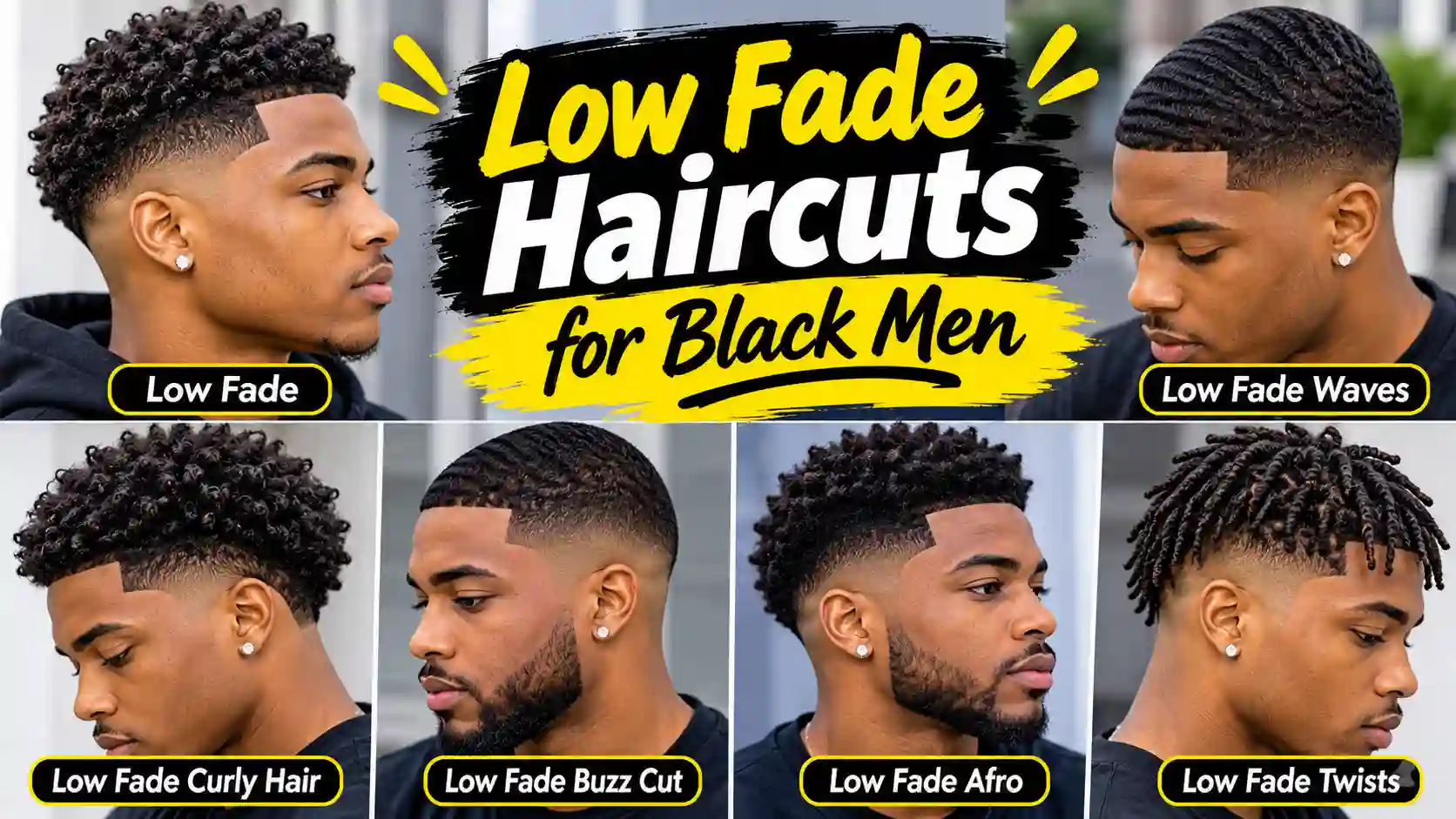
A low taper fade black haircut is a clean and stylish choice for men who want to keep their natural hair texture while maintaining neat sides and edges. This haircut gradually shortens the hair around the temples, sideburns, and neckline without removing too much length from the sides or top.
It works beautifully with natural coils, curls, waves, afros, twists, and locs. Whether you prefer a short haircut, a full afro, or a detailed hairstyle, a low taper fade gives your look a fresh and balanced finish.
In this guide, you will discover 25 stylish haircut ideas, suitable hair types, face-shape tips, barber instructions, and simple maintenance advice.
What Is a Low Taper Fade Black Haircut?
A low taper fade is a haircut in which the hair gradually becomes shorter around the temples, sideburns, and lower neckline. The fade stays close to the ears and neck, leaving most of the natural hair length untouched.
For Black men, this haircut is especially popular because it complements different natural hair textures, including 4A, 4B, and 4C hair. It can also be paired with curls, waves, dreadlocks, cornrows, and many other hairstyles.
Unlike a high taper fade, which removes more hair from the sides, a low taper keeps the overall appearance subtle and natural.
Why Is the Low Taper Fade Popular Among Black Men?
The low taper fade offers several benefits:

- Preserves natural texture: It allows coils, curls, waves, and afro hair to remain the main feature.
- Creates a clean appearance: The temples, sideburns, and neckline look neat.
- Works with different styles: You can combine it with twists, locs, waves, or a short crop.
- Easy to customize: Your barber can adjust the top length and fade height.
- Suitable for different settings: It can look stylish at school, work, and casual events.
25 Best Low Taper Fade Black Haircut Styles
1. Classic Low Taper Fade
The classic low taper fade is a simple option for men who prefer a clean and natural appearance. The barber keeps the top at its natural length and gradually blends the hair around the temples and neckline.
It works with most hair textures and does not require complicated daily styling.
2. Short Low Taper Fade
A short low taper fade black haircut is ideal for men who want a simple, low-maintenance style. The top stays short while the sides receive a subtle taper.
It looks especially good with short curls and coily hair.
3. Curly Low Taper Fade
This style keeps natural curls on top while cleaning up the sides and back. Curl cream or a lightweight leave-in conditioner can help define the curls.
It is a good choice for men who want their natural texture to stand out.
4. Afro Low Taper Fade
An afro low taper fade combines a full natural afro with clean faded edges. The barber shapes the temples and neckline while preserving the volume and rounded shape of the afro.
An afro pick and leave-in conditioner can help maintain the style.
5. Sponge Twist Low Taper Fade
Sponge twists create small, defined coils across the top. The low taper keeps the sides neat without taking attention away from the twists.
This hairstyle works well with short to medium-length coily hair. Use a curl sponge and a small amount of twist cream to create the texture.
6. Two-Strand Twist Low Taper Fade
Two-strand twists add a neat and textured appearance to the top. The low taper around the ears and neckline creates a clean contrast.
This style is suitable for medium or longer natural hair. Leave-in conditioner and twist cream can help keep the twists moisturized.
7. Dreadlocks or Locs with a Low Taper Fade
A low taper fade with dreadlocks, also called locs, combines longer hair on top with clean edges around the ears and neck.
You can wear your locs loose, in a ponytail, or in a bun. A light loc moisturizer can help maintain their appearance.
8. 360 Waves with a Low Taper Fade
A low taper fade with 360 waves is a popular option for men who like short, carefully styled hair. The wave pattern remains visible on top while the temples and sideburns receive a clean taper.
Regular brushing and wave cream can help maintain the pattern. A satin durag can also protect the waves while sleeping.
9. Buzz Cut with a Low Taper Fade
A buzz cut with a low taper fade is simple, neat, and easy to manage. The hair stays very short across the head, while the barber adds a gradual blend around the temples and neckline.
It is a practical choice for men who prefer minimal styling.
10. High Top with a Low Taper Fade
A high-top hairstyle keeps extra height and volume on top while the low taper cleans up the sides. This creates a bold shape without removing too much natural hair.
It works particularly well with thick and coily hair.
11. Textured Crop with a Low Taper Fade
A textured crop features short, natural-looking hair on top with a subtle taper around the sides. It gives the haircut a modern appearance without requiring a long styling routine.
A small amount of matte cream or curl product can help define the texture.
12. French Crop with a Low Taper Fade
The French crop has a short top and a small fringe at the front. Adding a low taper keeps the sides neat while preserving the shape of the haircut.
It is a useful option for men who prefer short hair with a little extra detail.
13. Edgar Low Taper Fade
The Edgar haircut usually features a textured top and a straight fringe across the forehead. A low taper adds a clean finish around the temples and neckline.
This style works well with thick, curly, or coily hair.
14. Mohawk with a Low Taper Fade

A Mohawk keeps a longer strip of hair running from the front toward the back, while the sides are shortened. A low taper creates a softer finish around the temples and neckline.
Curly and coily hair can give this hairstyle extra volume and texture.
15. Burst Fade with a Low Taper Style
A burst fade curves around the ear and creates a rounded fading pattern. It is different from a traditional low taper, which focuses mainly on the temples, sideburns, and neckline.
Some modern haircuts combine elements of both styles. This can create a more noticeable look, especially with a Mohawk or frohawk.
16. Low Taper Fade with a Beard
Combining a low taper fade with a beard creates a balanced appearance. The barber can blend the sideburns into the beard so there is a smooth connection between the haircut and facial hair.
You can choose a short beard or a fuller beard depending on your preference.
17. Low Taper Fade with a Line Up
A line up creates clean, defined edges around the forehead and temples. When combined with a low taper, it gives the haircut a sharp and polished finish.
Tell your barber whether you prefer a natural hairline or a more defined shape.
18. Low Taper Fade with Hair Design
A simple shaved line or pattern can add personality to a low taper fade. Hair designs are usually placed in the shorter faded area, allowing the top to remain natural.
Choose a design that matches your preferred style and is easy to maintain.
19. Professional Low Taper Fade
A professional low taper fade keeps the overall haircut neat without looking too dramatic. The top can remain short or medium-length, while the temples and neckline receive a soft blend.
It is suitable for office environments, formal occasions, and everyday wear.
20. Teen Low Taper Fade
A low taper fade is also a stylish option for teenage boys. It can be paired with short curls, waves, twists, or a textured top.
The fade should be adjusted to suit the teenager’s preferred length and personal style.
21. Thick Hair Low Taper Fade
Thick hair can create a full and noticeable shape on top. A low taper removes some of the bulk around the ears and neckline while preserving the natural fullness.
Your barber can adjust the top length to make the haircut easier to manage.
22. Natural Coils Low Taper Fade
Natural coils look great with a low taper because the haircut highlights their texture without removing too much length.
This style can work with different Type 4 hair patterns, including 4A, 4B, and 4C hair. Use a moisturizing leave-in conditioner or coil cream to keep the hair soft.
23. Temple Taper with a Low Taper Look
A temple taper focuses on the hair around the temples and sideburns. It can create a clean front profile while leaving more hair at the back.
A traditional low taper usually includes the lower neckline as well, so tell your barber exactly which areas you want tapered.
24. Modern Low Taper Fade with Colored Curls
Adding color to natural curls can create contrast with a dark, clean taper. You can choose subtle highlights or a more noticeable color.
Color-treated hair needs extra moisture, so use a moisturizing conditioner and products designed for colored hair.
25. Low Taper Fade with a Hard Part

A hard part is a defined line shaved into the side of the hair. It adds detail to a low taper fade and works with short crops, waves, and curls.
Ask your barber to keep the line clean and balanced with the rest of the haircut.
Low Taper Fade for Different Black Hair Types
Choosing a style that matches your natural hair texture can make the haircut easier to manage.
4A, 4B, and 4C Coily Hair
Type 4 hair has a naturally coily texture and can hold different shapes. A low taper works well because it cleans up the edges while allowing the top to keep its volume.
You can choose natural coils, sponge twists, a short afro, or a textured crop.
Curly Hair
Curly hair creates a noticeable contrast between the longer top and faded sides. A low taper can frame the curls without removing their natural shape.
Use curl cream or a lightweight leave-in conditioner to define the curls.
Thick Hair
A low taper is useful for thick hair because it reduces bulk around the ears and neckline. You can keep the top full or ask your barber to remove some extra weight.
Natural Afro Hair

An afro with a low taper keeps the natural shape while creating a clean outline. Your barber should preserve the volume and avoid cutting too much from the top.
Medium-Length Textured Hair
Medium-length hair gives you more styling choices. You can try two-strand twists, locs, a textured crop, or a curly top with a low taper.
Which Face Shapes Suit a Low Taper Fade?
A low taper can be adjusted to suit different face shapes. The top length and overall haircut shape make a difference.
Oval Face
An oval face usually works with many haircut styles. You can try short curls, a textured crop, waves, or a medium-length top.
Round Face
A round face can benefit from extra height on top. A high top, sponge twists, or a fuller afro can create a longer-looking appearance.
Square Face
A square face often has a strong jawline. A clean line up and a subtle low taper can highlight its natural shape.
Diamond Face
A diamond face usually has wider cheekbones and a narrower forehead and chin. Textured curls on top can help create a balanced appearance.
Heart Face
A heart-shaped face is often wider around the forehead and narrower near the chin. A low taper with moderate top volume can create a balanced look.
Oblong Face
An oblong face is longer than it is wide. Short or medium-length hair on top can help avoid making the face appear longer.
Low Taper Fade vs. Mid Taper Fade vs. High Taper Fade
These haircuts differ mainly in where the fading begins.
- Low taper fade: Focuses on the temples, sideburns, and lower neckline. It preserves more hair around the sides.
- Mid taper fade: Begins around the middle of the sides and creates a more noticeable blend.
- High taper fade: Starts higher around the temples and removes more hair from the upper sides.
If you prefer a subtle and natural appearance, a low taper may be the better option. If you want a more visible contrast, consider a mid or high taper.
Low Taper Fade vs. Burst Fade
A low taper fade focuses on the temples and neckline, while a burst fade creates a rounded shape around the ear.
A low taper works well with waves, afros, curls, and locs. A burst fade is often paired with Mohawks, frohawks, and longer textured tops.
Low Taper Fade vs. Temple Fade
A temple fade focuses mainly on the temples and sideburns. A low taper generally includes the lower neckline as well.
If you want a clean front profile while keeping the back natural, a temple fade may suit your preference. If you want both the temples and neckline cleaned up, ask for a low taper.
How to Ask Your Barber for a Low Taper Fade
Clear instructions help your barber understand the exact haircut you want.
- Explain the fade height: Ask for a low taper around the temples, sideburns, and lower neckline.
- Discuss clipper guards: You can ask the barber to start with a #0 or #1 at the bottom and blend gradually into a #2 or #3, depending on your desired finish.
- Choose your hairline: Decide whether you want a natural hairline or a sharp line up.
- Discuss your beard: If you have facial hair, ask for a smooth blend between the sideburns and beard.
- Choose the neckline: You can select a rounded neckline, squared edge, or natural tapered finish.
- Show a reference photo: Bring a picture of the exact haircut you want so your barber can understand the shape and length.
How to Style a Low Taper Fade Black Haircut

You do not need a complicated routine to keep this haircut looking good.
- Lightly dampen your hair with water or a hydrating mist.
- Apply a small amount of leave-in conditioner.
- Use curl cream or hair butter if your hair needs extra moisture.
- Style the top with a sponge, pick, brush, or comb.
- Avoid using too much product around the scalp and faded edges.
Choose styling methods that match your hair texture. For example, a curl sponge works well for creating coils, while regular brushing helps maintain 360 waves.
Best Hair Products for a Low Taper Fade
The right products can help maintain your natural texture and keep your hair manageable.
- Curl cream: Helps define curls and reduce dryness.
- Leave-in conditioner: Adds moisture without requiring a full wash.
- Hair butter: Helps seal moisture in coily hair.
- Twist sponge: Creates coils and short sponge twists.
- Hair oil: Adds shine and can help soften dry hair.
- Curl gel: Provides hold and helps define curls and waves.
- Sulfate-free shampoo: Cleans the hair while helping preserve its natural oils.
You do not need to use every product. Choose only what works for your hair and preferred hairstyle.
How to Maintain a Low Taper Fade
Regular care helps your haircut stay neat and your natural hair remain healthy.
- Schedule regular trims: Visit your barber every two to four weeks, depending on how quickly your hair grows and how sharp you want the fade.
- Moisturize regularly: Use water and a lightweight leave-in conditioner to prevent dryness.
- Wash carefully: A gentle, sulfate-free shampoo can help clean the hair without stripping too much natural oil.
- Deep condition: Use a suitable deep conditioner when your hair needs extra softness and moisture.
- Protect your hair at night: A satin durag or bonnet can reduce friction and help protect your hairstyle.
- Care for your scalp: Keep your scalp clean and avoid applying excessive amounts of heavy products.
Common Low Taper Fade Mistakes to Avoid
A few simple mistakes can affect the appearance of your haircut.
- Choosing the wrong fade height: A high taper may remove more hair than you wanted.
- Cutting too much from the top: This can change the natural shape of your afro, curls, or coils.
- Ignoring the hairline: An overly sharp line up may not match your preferred natural appearance.
- Using too much product: Heavy products can cause buildup and make hair feel greasy.
- Skipping maintenance: The fade and edges can lose their clean appearance as the hair grows.
- Not protecting your hair at night: Friction from pillowcases can create frizz and affect your hairstyle.
Frequently Asked Questions
It is a haircut that gradually shortens the hair around the temples, sideburns, and lower neckline while keeping most of the natural hair length on top.
Yes. A low taper fade works well with 4C hair because it cleans up the edges while preserving the natural coils and volume on top.
Most people refresh their taper every two to four weeks. Shorter styles may need more frequent trims to keep the edges looking neat.
Yes. A low taper can be combined with short, medium, or long dreadlocks. It keeps the areas around the ears and neckline clean while allowing the locs to remain the main feature.
It depends on your preference. A low taper keeps more hair around the sides and creates a subtle finish. A high taper removes more hair and creates a stronger contrast.
Yes. A low taper fade can work well for Black boys and teenagers. It can be paired with short curls, coils, waves, or a small afro.
The guard number depends on the desired length and your barber’s blending technique. A #0 or #1 may be used near the bottom, with a gradual blend into longer guards such as #2 or #3.
Yes. A low taper complements 360 waves by keeping the temples and sideburns neat while preserving the wave pattern on top.
A low taper usually focuses on the temples, sideburns, and neckline. A low fade generally covers a larger area of the sides and may blend down to the skin.
Yes. Its subtle shape and clean finish make it a suitable choice for many workplaces, schools, and formal settings.
Final Thoughts
A low taper fade black haircut is a versatile option for men who want a clean appearance without losing their natural hair texture. It works with afros, coils, curls, waves, sponge twists, two-strand twists, and locs.

Ryan Mitchell is a men’s haircut and grooming writer who focuses on fades, tapers, modern haircut styles, and barbering techniques. He enjoys breaking down different cuts in simple terms so readers can understand how a style works with their hair type, face shape, and personal look. His guides also cover styling, maintenance, and useful tips to help readers get better results at the barbershop.
