


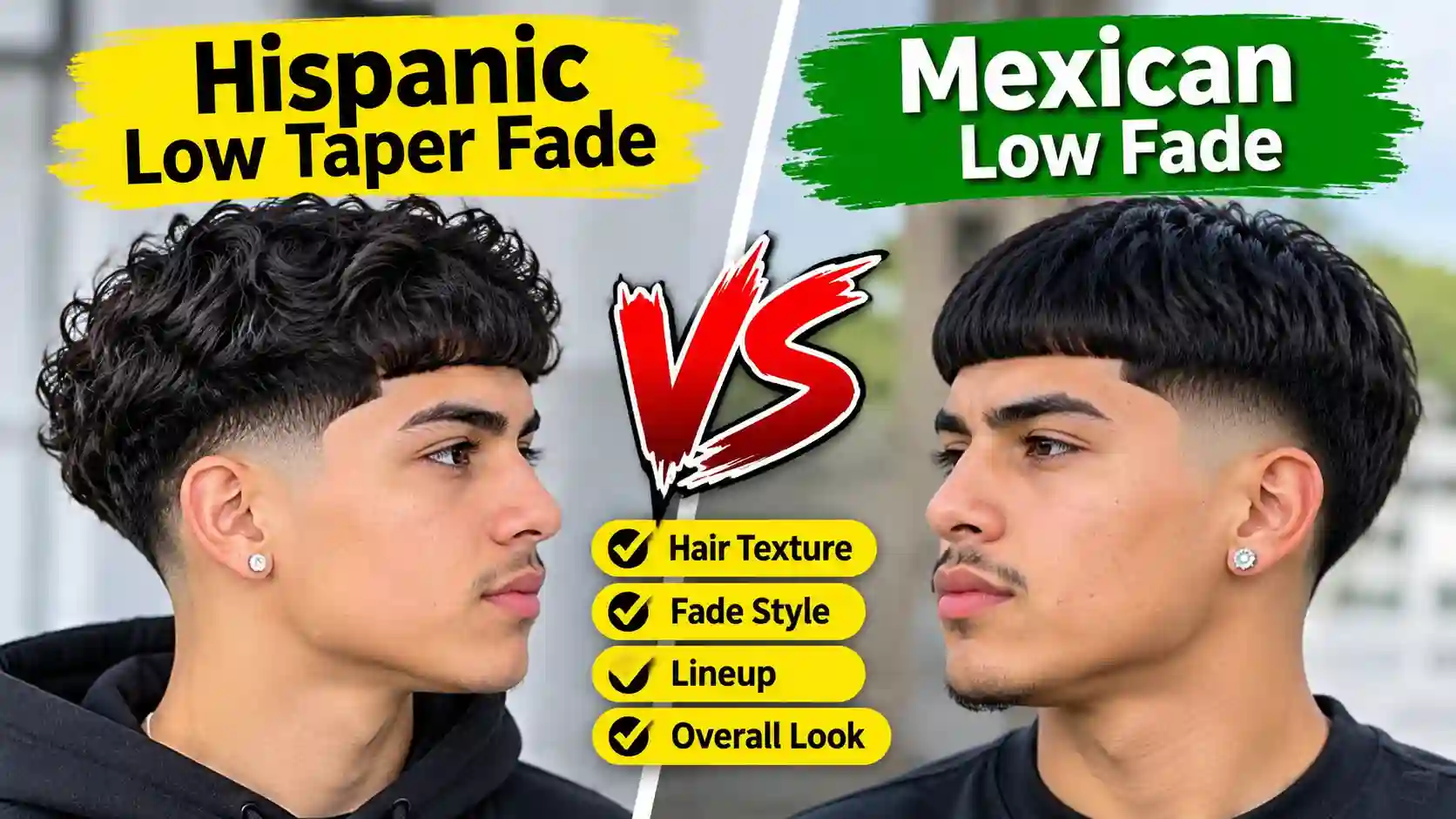
The Hispanic vs Mexican low taper fade is a popular topic among men looking for a clean, modern, and stylish haircut. Both styles can feature neatly tapered sides, clean temples, and a gradual blend around the neckline. However, there is no official haircut technique that separates Hispanic and Mexican low taper fades.
Hispanic is a broad cultural identity, while Mexican refers to a nationality and cultural identity. Men from both backgrounds can choose similar hairstyles based on their hair texture, personal preferences, and grooming habits. A Mexican taper fade may feature a sharp lineup, textured top, or curly hairstyle, while a Hispanic low taper fade can have the same features.
In this guide, you will learn about the differences, popular hairstyles, straight hair options, fade variations, styling products, and tips for explaining your preferred haircut to a barber.
What Is a Hispanic Low Taper Fade?
A Hispanic low taper fade is a modern haircut that gradually shortens the hair around the temples, sideburns, and neckline. It keeps most of the hair on the sides while creating a clean and balanced appearance.

This haircut works with different hair textures, including straight, wavy, curly, thick, and coarse hair. You can combine it with a textured top, slick back, side part, or curly hairstyle.
Some popular features include:
- A gradual taper around the temples.
- Clean and blended sideburns.
- A natural or sharp hairline.
- A neat neckline.
- Extra length and texture on top.
- Optional beard blending.
The final appearance depends on how low the taper starts, how much length remains on top, and whether you prefer natural or sharp edges.
What Is a Mexican Low Taper Fade?
A Mexican low taper fade is another name commonly used for a low taper haircut chosen by Mexican men. It usually features short, gradually blended hair around the temples and neckline while keeping more length on top.
Some popular combinations include a textured fringe, Edgar cut, curly top, slick back, or side part. A sharp lineup can make the haircut look more defined, while natural edges create a softer finish.
The Mexican taper fade is not one fixed haircut. It can be customized for straight, wavy, curly, thick, or coarse hair.
Hispanic vs Mexican Low Taper Fade: What Is the Difference?
The main difference is the meaning of the terms, not the haircut technique. Hispanic describes a broad cultural identity connected to Spanish-speaking backgrounds, while Mexican refers to people or culture associated with Mexico.
Both Hispanic and Mexican men can wear the same low taper fade styles. The appearance may change according to hair texture, haircut preference, top length, and barbering technique.
| Feature | Hispanic Low Taper Fade | Mexican Low Taper Fade |
| Haircut technique | Low taper | Low taper |
| Temple area | Gradually shortened | Gradually shortened |
| Neckline | Natural or clean finish | Natural or clean finish |
| Top hairstyle | Curly, straight, or textured | Curly, straight, or textured |
| Hairline | Natural or sharp lineup | Natural or sharp lineup |
| Styling | Depends on personal preference | Depends on personal preference |
Both styles can have a clean blend, sharp edges, textured hair, and different top lengths. Your barber can create either appearance according to your reference photo.
Best Hispanic vs Mexican Low Taper Fade Hairstyles for Men
There are many Hispanic vs Mexican low taper fade hairstyles for men. You can choose a simple everyday haircut or a more noticeable style with extra texture and volume.
1. Low Taper Fade with Textured Top
A textured top adds movement and volume while keeping the sides neat. Your barber can use scissors or texturizing techniques to create separation between the hair sections.
Matte clay or texture powder can help maintain the style throughout the day.
2. Mexican Low Taper Fade with Edgar Cut
The Edgar cut features a short, textured top and a straight or slightly curved fringe. Combining it with a low taper creates a modern appearance without removing too much hair from the sides.
This style can work with straight, thick, and slightly wavy hair.
3. Hispanic Low Taper Fade with Curly Hair
A curly low taper fade keeps the sides and neckline clean while allowing natural curls to remain visible on top.
Curl cream or leave-in conditioner can help improve curl definition and reduce dryness. Ask your barber to preserve enough length to show your natural curl pattern.
4. Low Taper Fade with Slick Back
A slick-back hairstyle is a good option if you prefer a neat and polished appearance. The longer hair on top is brushed backward using pomade or a suitable styling cream.
The low taper keeps the temples and neckline clean without creating an overly dramatic fade.
5. Low Taper Fade with Middle Part
A middle part divides the hair into two sections and creates a balanced appearance. This style works particularly well with medium-length straight or wavy hair.
You can use a light styling cream to keep the hair in place without making it look too stiff.
6. Low Taper Fade with Side Part
A side part creates a classic and organized hairstyle. It works with different hair lengths and can be styled with a comb and light pomade.
The tapered sides make the haircut look clean while the part adds definition to the top.
7. Low Taper Fade with Mullet-Style Back
A mullet-inspired hairstyle keeps the back longer than the sides and front. A low taper around the temples can make the transition look cleaner.
You can also combine this look with a textured or curly top.
8. Low Taper Fade with Beard Blend
A beard blend connects the sideburn area with facial hair. Your barber gradually reduces the length around the sideburns to create a smooth transition.
This combination works with a short boxed beard, goatee, or faded beard.
Hispanic Low Taper Fade for Straight Hair
A Hispanic low taper fade straight hair style is a suitable choice for men who want a clean and polished haircut. Straight hair makes it easier to create visible parts, smooth finishes, and textured fringe styles.
Some popular options include:
- Middle Part: Divides the hair into two balanced sections.
- Side Part: Creates a classic and neat appearance.
- Slick Back: Keeps the top brushed backward.
- Textured Fringe: Adds movement to the front.
- Messy Top: Creates a relaxed style with natural texture.
A Hispanic low taper straight hair haircut can look especially neat when the barber blends the temples and neckline carefully. If you want a natural appearance, ask for a soft transition instead of an extremely sharp skin fade.
Low Taper Fade for Different Hair Textures
Your natural hair texture plays an important role in choosing the right haircut. The same taper technique can produce different results depending on hair density, length, and curl pattern.
Straight Hair
Straight hair works well with slick backs, middle parts, side parts, and textured fringes. A barber can leave extra length on top to create different styles.
Wavy Hair
Wavy hair adds natural movement and volume. A low taper keeps the sides controlled while allowing the waves to remain visible.
Sea salt spray or a light texturizing spray can help define the natural pattern.
Curly Hair
A curly low taper fade highlights natural curls while keeping the sides clean. Curl cream and leave-in conditioner can help maintain curl definition.
Thick Hair
Thick hair can create a fuller appearance on top. Your barber may use scissors to remove some bulk and make the hairstyle easier to manage.
Coarse Hair
Coarse hair can be styled with a textured top, short fringe, or natural curls. A gradual blend around the temples and neckline helps create a balanced finish.
Low Taper Fade vs Other Popular Fade Styles
A low taper fade is not the only option available. You can also consider a burst fade, mid taper fade, low fade, or blowout taper fade.

Low Taper Fade vs Burst Fade
A burst fade curves around the ears, creating a rounded appearance. It is often combined with curly tops, textured hairstyles, and mullet-inspired cuts.
A low taper fade focuses more on the temples and neckline. Choose a burst fade if you want a more noticeable curved shape around the ears.
Low Taper Fade vs Mid Taper Fade
A mid taper fade starts higher around the sides than a low taper. It creates a more visible transition while keeping the top relatively full.
A low taper is better if you prefer a subtle finish, while a mid taper can provide more contrast.
Low Taper Fade vs Low Fade
A low fade generally removes more hair along the lower sides and back, creating a stronger fading effect. A low taper mainly focuses on the temples, sideburns, and neckline.
Both can create clean results, but the amount of faded area is different.
Low Taper Fade vs Blowout Taper Fade
A blowout taper fade combines tapered sides with fuller, lifted hair on top and sometimes around the back. Blow-drying helps create extra volume.
A traditional low taper fade can be more subtle and does not require a voluminous top.
Low Taper Fade vs Drop Fade
A drop fade follows the natural curve of the head and drops lower behind the ears. It creates a distinctive shape around the back.
A low taper keeps the taper focused around the temples and neckline instead.
How to Choose a Low Taper Fade for Your Face Shape
Your face shape can help you decide which top hairstyle and amount of volume may look balanced.
- Round Face: Consider a textured top or extra height to create a longer appearance.
- Oval Face: Many hairstyles can work, including slick backs, middle parts, and textured tops.
- Square Face: A textured top with a clean taper can complement a defined jawline.
- Long Face: A side part or fringe can help create a balanced appearance.
These are general styling suggestions. Your hair texture and personal preferences are also important.
How to Ask Your Barber for a Hispanic or Mexican Low Taper Fade
Good communication helps your barber understand the haircut you want. Instead of only saying Hispanic or Mexican low taper fade, explain the details of the style.
Follow these tips:
- Show your barber a clear reference photo.
- Explain how low you want the taper around your temples.
- Tell the barber whether you prefer a natural or sharp hairline.
- Mention how much length you want to keep on top.
- Explain whether you want a curly top, slick back, middle part, or textured fringe.
- Discuss whether you want your beard blended into the sideburns.
Your barber may use different clipper guards depending on your hair length and desired finish. Common guard sizes include #1, #2, #3, and #4. A #1.5 guard may also be used during blending. These numbers are not fixed requirements, so let your barber choose the appropriate technique.
Haircut Tools and Barbering Techniques
A clean low taper fade requires careful blending and attention to detail. Professional barbers may use several tools to achieve the desired appearance.

- Hair Clippers: Used to reduce hair length and create the fade.
- Clipper Guards: Help control the cutting length.
- Trimmers: Used for outlining and cleaning the edges.
- Scissors: Help shape and remove length from the top.
- Detailing Tools: Help refine the hairline and neckline.
Brands such as Wahl and Andis are known for professional barbering tools. Examples include the Wahl 5 Star Magic Clip, Wahl 5 Star Vapor, and Andis T-Outliner. These are equipment options, not products that every barber must use.
A skilled barber focuses on a smooth blend, balanced proportions, and a finish that suits the customer’s hair.
Best Products for Styling a Low Taper Fade
Using the right product can make your hairstyle easier to manage.
- Matte Clay: Adds texture and a natural-looking finish.
- Pomade: Helps create slick backs and smooth hairstyles.
- Curl Cream: Defines natural curls.
- Sea Salt Spray: Adds movement to wavy hair.
- Texture Powder: Provides lift and volume.
- Leave-In Conditioner: Helps keep hair soft and manageable.
- Hair Gel: Offers stronger hold for structured hairstyles.
Choose products according to your hair type and desired finish. Avoid using too much product because it can make your hair look heavy or greasy.
How to Maintain a Low Taper Fade
A low taper fade needs regular care to keep its shape. The sides and neckline may start looking less defined as your hair grows.
Here are some useful maintenance tips:
- Visit your barber regularly for touch-ups.
- Keep your hair clean with a suitable shampoo.
- Use conditioner to maintain softness.
- Apply styling products in moderate amounts.
- Maintain your beard and sideburns if you have facial hair.
- Avoid trimming the hairline yourself if you are not experienced.
Many men schedule a haircut every two to three weeks to keep the taper looking fresh. Your ideal schedule depends on your hair growth and preferred appearance.

Common Low Taper Fade Mistakes to Avoid
A few simple mistakes can affect the final appearance of your haircut.
- Choosing a fade height without explaining your preference.
- Removing too much length from the top.
- Asking for a sharp lineup when you prefer natural edges.
- Ignoring your natural hair texture.
- Not showing your barber a reference photo.
- Using too much styling product.
- Waiting too long between touch-ups when you want a sharp finish.
Discuss your preferences with your barber before the haircut begins. This can help avoid misunderstandings.
Frequently Asked Questions
There is no official technical difference. Hispanic is a broad cultural identity, while Mexican refers to a nationality and cultural identity. Both can feature the same low taper fade technique.
A Mexican taper fade is a commonly used name for a low or other taper haircut chosen by Mexican men. It can include a textured top, curly hair, Edgar cut, slick back, or sharp lineup.
Yes. Straight hair works well with a low taper fade, especially when combined with a middle part, side part, slick back, or textured fringe.
A burst fade curves around the ears, while a low taper focuses on gradually shortening the hair around the temples, sideburns, and neckline.
Yes. A mid taper generally starts higher around the sides, creating a more noticeable transition than a low taper.
Many men get a touch-up every two to three weeks. The right schedule depends on how quickly their hair grows and how sharp they want the haircut to remain.
Yes. A low taper fade can be combined with a short boxed beard, goatee, or faded beard. A smooth beard blend can connect the sideburns with facial hair.
Matte clay works well for textured styles, pomade is useful for slick backs, and curl cream helps define natural curls. Sea salt spray can add movement to wavy hair.
Final Thoughts
The Hispanic vs Mexican low taper fade is not a comparison between two separate haircut techniques. Both terms can describe similar low taper hairstyles, and the final look depends on individual preferences, hair texture, and barbering skills.
You can choose a straight, curly, or wavy top and combine it with an Edgar cut, slick back, middle part, or textured fringe. Other options, such as a burst fade, mid taper fade, low fade, and blowout taper fade, offer different finishes.
The best haircut is one that suits your natural hair, face shape, and personal style. Show your barber a reference photo and explain the taper height, top length, and finish you want.

Ryan Mitchell is a men’s haircut and grooming writer who focuses on fades, tapers, modern haircut styles, and barbering techniques. He enjoys breaking down different cuts in simple terms so readers can understand how a style works with their hair type, face shape, and personal look. His guides also cover styling, maintenance, and useful tips to help readers get better results at the barbershop.
