


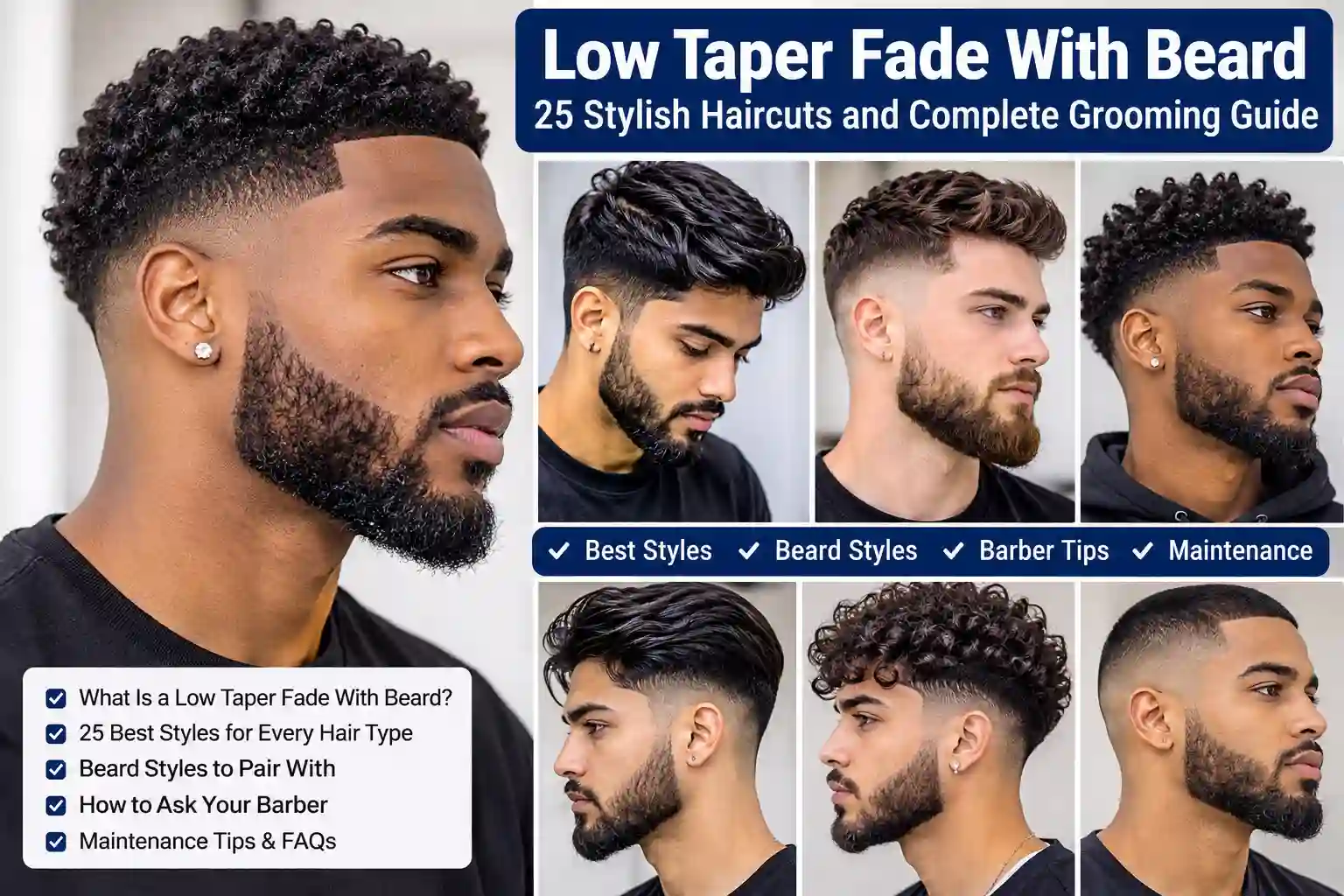
A low taper fade with beard is one of the most stylish and versatile haircut combinations for men. It combines clean, gradually shortened sides with a neatly shaped beard to create a balanced and modern appearance. The taper usually starts around the temples, sideburns, and neckline, keeping the transition subtle and natural.
One of the best things about this haircut is its flexibility. You can wear it with straight hair, curly hair, waves, an afro, a buzz cut, a slick back, or a textured fringe. It also looks good with different beard styles, including stubble, a short boxed beard, a goatee, and a full beard.
Whether you want a simple everyday haircut or a sharp modern style, there are many ways to customize a low taper fade with beard. This guide covers 25 haircut ideas, beard combinations, blending techniques, barber tips, and maintenance advice.
What Is a Low Taper Fade With Beard?
A low taper fade with beard is a men’s haircut that gradually reduces the hair length around the temples, sideburns, and neckline. The transition starts low on the head, leaving more hair around the sides than a mid or high fade.
The beard is shaped to complement the haircut. Some men prefer a smooth blend between their sideburns and facial hair, while others choose a disconnected beard style.
A barber usually uses different clipper guard lengths to create a smooth transition. The final result can be a subtle shadow taper, a sharper skin finish, or a natural-looking blend.
This haircut works with short, medium, and long hairstyles. It is also suitable for different hair textures and face shapes.
Why Choose a Low Taper Fade With Beard?

A low taper fade with beard offers several benefits:
- Clean appearance: The tapered sides create a neat and polished finish.
- Versatile styling: It works with different hairstyles and beard lengths.
- Natural transition: A properly blended beard connects the haircut and facial hair.
- Suitable for different textures: Straight, wavy, curly, and coily hair can all work with this style.
- Customizable finish: You can choose a skin taper, shadow taper, or natural taper.
- Easy to personalize: Your barber can adjust the taper height, beard shape, and top length.
The style can look professional, casual, or bold depending on how you combine the haircut with your beard.
25 Best Low Taper Fade With Beard Styles
1. Classic Low Taper Fade With Beard
The classic low taper fade with beard is a timeless option for men who prefer a clean and balanced appearance. The barber gradually shortens the hair around the temples and neckline while keeping enough length on the sides.
You can pair this haircut with a short boxed beard or a medium-length beard. Ask your barber for a natural sideburn transition if you want the haircut and beard to connect smoothly.
2. Low Taper Fade With Beard for Black Men
A low taper fade with beard for Black men looks excellent with natural hair textures. You can combine it with waves, short curls, twists, or an afro.
The barber keeps the natural volume on top while cleaning the temples and neckline. A sharp line up and carefully shaped beard can make the haircut look even more defined.
A low afro taper fade with beard is another great option for men who want to maintain their natural hair volume.
3. Mid Taper Fade With Beard
A mid taper fade with beard starts higher than a traditional low taper. It creates more visible contrast around the sides while maintaining a gradual transition.
This haircut works well with a textured top, curly hair, or a side part. Choose a mid taper if you want a slightly bolder appearance without going for a high taper fade.
4. Low Taper Fade With Beard for Straight Hair
A low taper fade with beard for straight hair creates a clean and polished appearance. Straight hair makes blending lines more visible, so the barber should focus on smooth transitions and avoid noticeable clipper marks.
You can style the top with a side part, comb over, textured fringe, or slick back. A short boxed beard can complete the look.
5. Low Taper Fade With Beard for Indian Men
A low taper fade with beard for Indian men offers many styling options for thick, straight, wavy, and slightly curly hair.
A textured top, side-swept hairstyle, or brushed-up quiff can complement the taper. A neatly trimmed beard adds definition around the jawline and creates a balanced appearance.
6. High Taper Fade With Beard
A high taper fade with beard creates a bolder look because the transition starts higher above the ears.
It works well with short curls, textured hairstyles, and sharp beard outlines. Compared with a low taper, it exposes more of the sides and creates stronger contrast.
7. Low Taper Fade With Beard for Curly Hair
A low taper fade with beard for curly hair highlights natural curls while keeping the lower sides clean.
You can choose short curls, loose curls, or a fuller curly top. A curly low taper fade with beard looks especially good when the barber preserves the natural curl pattern and creates a smooth transition around the temples.
8. Low Taper Fade With Beard Blend
A low taper fade with beard blend focuses on connecting the sideburns with the facial hair.
The barber gradually changes the hair length from the temple toward the beard. This creates a natural transition instead of making the haircut and beard look like two separate sections.
A smooth beard blend works particularly well with short and medium-length beards.
9. Low Taper Fade With Beard for White Men
A low taper fade with beard for White guys works with straight, wavy, and curly hairstyles.
You can combine it with a textured crop, slick back, side part, or quiff. A short beard, light stubble, or fuller beard can complete the hairstyle.
The best option depends on your natural hair texture, beard growth, and preferred appearance.
10. Low Taper Fade With Beard Line Up

A low taper fade with beard line up combines gradual fading with sharp and clean outlines.
The barber shapes the forehead, temples, cheek line, and neckline to create a defined finish. A lineup can make short hair and a neatly trimmed beard look especially sharp.
For a natural result, ask your barber to follow your existing hairline instead of creating an unnecessarily high or artificial outline.
11. Buzz Cut Low Taper Fade With Beard
A buzz cut low taper fade with beard is a simple choice for men who prefer short hair.
The top stays at a nearly uniform length, while the taper creates a clean finish around the temples and neckline. Light stubble or a short beard adds contrast to the haircut.
This style is practical for men who want a simple grooming routine.
12. Short Low Taper Fade With Beard
A short low taper fade with beard keeps the hair close to the scalp without removing all the length around the sides.
It works well with a short boxed beard, light stubble, or a natural beard shape. Regular edge-ups help maintain the clean appearance.
13. Very Low Taper Fade With Beard
A very low taper fade with beard keeps the shortest section extremely close to the lower hairline.
It creates a subtle transition around the ears and neckline while preserving more hair around the sides. Choose this option if you prefer a natural haircut without a dramatic fade.
14. Afro Low Taper Fade With Beard
An afro low taper fade with beard maintains the natural shape and volume of an afro.
The barber cleans the temples and neckline without cutting too much into the coily hair on top. A shaped beard and defined lineup make the hairstyle look complete.
15. Middle Part Low Taper Fade With Beard
A middle part low taper fade with beard is a stylish option for men who prefer longer hair.
The hair is divided into two sections and falls naturally on either side of the face. The low taper keeps the area around the ears tidy, while a medium beard adds balance.
16. Slick Back Low Taper Fade With Beard
A slick back low taper fade with beard creates a polished and modern appearance.
The longer hair on top is brushed backward with a comb and styling product. A neatly trimmed beard complements the hairstyle and works well for both formal and casual occasions.
17. Textured Fringe Low Taper Fade With Beard
A textured fringe low taper fade with beard features a forward-facing top with natural movement.
The fringe can be styled with matte clay or texture powder. The clean sides provide contrast without taking attention away from the top.
This haircut is a good choice for men who prefer a relaxed and modern hairstyle.
18. Lower Taper Fade With Beard

A lower taper fade with beard keeps the shortest area close to the lower hairline.
It is a subtle variation for men who want to preserve more hair around the sides. Ask your barber to maintain a natural transition around the temples and sideburns.
19. Low Cut Taper Fade With Beard
A low cut taper fade with beard is a simple haircut with short hair on top and gradually tapered sides.
It looks good with light stubble or a short beard. Regular edge-ups help maintain a clean appearance without requiring complicated styling.
20. Low Mid Taper Fade With Beard
A low mid taper fade with beard offers a transition between a low and mid taper appearance.
It provides slightly more contrast around the sides while keeping the overall haircut balanced. Pair it with a textured top, short curls, or a side part.
21. Low Afro Taper Fade With Beard
A low afro taper fade with beard is another option for men who want to maintain natural afro volume.
The barber shapes the edges around the temples and neckline while leaving the top full. You can choose a rounded afro or a shorter coily style.
22. Low Skin Taper Fade With Beard
A low skin taper fade with beard gradually blends the hair down to bare skin around the lowest part of the taper.
It creates a sharper finish than a shadow taper. A carefully blended beard helps prevent an abrupt transition near the sideburns.
23. Low Bald Taper Fade With Beard
A low bald taper fade with beard uses a skin-level finish near the temples and neckline.
The contrast between the bare lower section and fuller hair above creates a clean appearance. It works particularly well with a short or medium beard.
24. Low Drop Taper Fade With Beard
A low drop taper fade with beard follows the natural curve of the head behind the ears.
The curved shape gives the haircut a different appearance from a traditional straight taper. It works well with curly, wavy, and textured hairstyles.
25. Low Taper Fade With Beard Trim
A low taper fade with beard trim combines clean tapered sides with carefully maintained facial hair.
The barber adjusts the beard length, cheek line, neckline, and mustache to match your preferred shape. This style is suitable for men who want a neat everyday appearance.
Best Beard Styles to Pair With a Low Taper Fade
Your beard length, density, and natural growth pattern can change the final appearance of your haircut. Here are some popular beard styles to consider.

Short Boxed Beard
A short boxed beard has defined cheek lines and a clean neckline. It is a good match for a low taper fade because it creates a neat outline around the jaw.
Full Beard With Faded Sideburns
A full beard with faded sideburns creates a gradual connection between the haircut and facial hair. The beard becomes fuller around the cheeks and jaw while the sideburns remain shorter.
Beardstache With Low Taper
A beardstache combines a fuller mustache with shorter beard growth around the cheeks and chin. The low taper keeps the haircut subtle and lets the mustache become the main feature.
Goatee or Circle Beard
A goatee focuses on the chin, while a circle beard connects the mustache with the hair around the chin. Both are useful options for men who do not want a full beard.
Light Stubble
Light stubble creates a simple and natural appearance. It works well with short haircuts, including a buzz cut and a short low taper fade.
Patchy-Friendly Beard
Men with patchy beard growth can still wear a low taper fade. Instead of forcing a continuous fade through thin areas, the barber can shorten uneven growth, shape the beard around denser areas, or create an intentional separation.
Long Beard With Low Taper
A long beard creates a bold contrast with a low taper. Keep the upper sideburn area shorter and let the beard become fuller toward the jaw to avoid a block-like appearance.
Low Taper Fade vs Low Fade vs Other Fade Haircuts
These haircut names are related, but they describe different techniques and results.
Low Taper Fade
A low taper gradually shortens the hair around the temples and neckline. It keeps more length around the sides and creates a subtle appearance.
Low Fade
A low fade reduces the hair more noticeably around the lower sides of the head. It can blend down to the skin and generally creates more contrast than a low taper.
Mid Taper Fade
A mid taper starts higher than a low taper. It creates a more visible transition around the sides while maintaining a gradual finish.
High Taper Fade
A high taper starts higher around the temples and creates a bolder appearance. It is suitable for men who want more contrast.
Low Drop Fade
A low drop fade follows the natural curve of the head behind the ears. It creates a rounded transition rather than a straight line.
Skin Taper Fade
A skin taper gradually blends the hair down to bare skin around the lowest part of the taper. It creates a sharp and clean finish.
Beard Fade
A beard fade focuses on gradually changing the length of facial hair. It can connect the sideburns with the beard or create a smooth transition within the beard itself.
How to Choose a Low Taper Fade for Your Face Shape
The best haircut depends on your natural hair texture, beard growth, head shape, and preferred outline.

Round Face
Adding some height to the top can create the appearance of a longer face. A carefully shaped beard can also add definition around the jawline.
Oval Face
An oval face works with many hairstyles. You can try a textured crop, slick back, curly top, or middle part with a low taper.
Square Face
A short boxed beard or a slightly fuller beard along the jaw can complement a square facial structure. A natural taper keeps the haircut balanced.
Long Face
Keeping some width around the temples and avoiding excessive height on top can help balance a longer face.
Heart-Shaped Face
A fuller beard around the jaw and chin can add visual balance to a narrower chin. A low taper with moderate top volume can complement this shape.
How to Blend a Taper Fade Into a Beard
A smooth beard blend is one of the most important parts of this haircut. The sideburns should gradually transition from the scalp hair into the facial hair.
Here is the general barbering process:
- Plan the haircut: Decide where the low taper will begin around the temples and neckline.
- Choose the shortest finish: Decide between bare skin, near-skin, or a shadow finish.
- Create the initial taper: Use a suitable clipper guard to establish the shortest section.
- Work through longer guards: Gradually increase the hair length to remove visible lines.
- Shape the beard: Establish the beard’s base length, cheek line, and neckline.
- Blend the sideburns: Connect the haircut with the beard using gradual length changes.
- Check both sides: Compare the transitions and refine the overall outline.
Barbers may use adjustable clippers, guards, and detail trimmers to create the desired result. The exact technique depends on hair density, clipper type, and the finish you want.
Low Taper Fade Guard Numbers Explained
Clipper guards help barbers control the amount of hair removed during a haircut. Different guard sizes create different lengths.
Common approximate guard measurements include:
- #0: A very short setting, depending on the clipper.
- #0.5: Around 1.5 mm.
- #1: Around 3 mm.
- #1.5: Around 4.5 mm.
- #2: Around 6 mm.
- #3: Around 10 mm.
- #4: Around 13 mm.
These measurements are approximate and can vary between clipper brands and models.
Rather than requesting only a guard number, explain whether you want a skin finish, near-skin finish, or visible shadow. Your barber can select the correct guard combination for your hair.
How to Ask Your Barber for a Low Taper Fade With Beard
A clear explanation helps your barber understand the finish you want.
Before your appointment, decide these five things:
- Starting height: Keep the taper low around the temples, ears, and nape.
- Skin finish: Choose between skin, near-skin, and shadow.
- Top shape: Decide whether you want a buzz cut, crop, curls, waves, quiff, or side part.
- Beard length: Explain whether you prefer stubble, a short beard, or a full beard.
- Sideburn connection: Decide whether you want a connected beard fade or an intentional separation.
You can also bring front, side, and rear reference photos. Choose examples that have a similar hair texture, beard density, and hairline to yours.
Before leaving the barber chair, check the sideburn transitions, beard symmetry, rear taper, cheek lines, and neckline.
Common Low Taper Fade and Beard Mistakes to Avoid
A good haircut depends on more than the fade itself. These common mistakes can affect the final appearance.
- Abrupt sideburn transition: A sudden change in length can make the beard look disconnected.
- Too much beard bulk near the temple: Heavy facial hair beside a very short taper can create an uneven outline.
- Mismatched perimeter lines: The hairline, cheek line, and neckline should complement each other.
- Uneven beard length: Different lengths on each side can affect symmetry.
- Incorrect taper height: A taper that starts too high may not give you the subtle appearance you wanted.
- Ignoring skin sensitivity: Repeated close shaving can cause irritation and razor bumps.
- Over-trimming the beard: Cutting too much length can change the beard’s natural shape.
If you prefer a disconnected beard, tell your barber clearly. An intentional separation can look stylish, while an accidental gap may make the haircut appear unfinished.
How to Maintain Your Low Taper Fade and Beard at Home
Maintaining this haircut involves keeping the fade fresh, shaping the beard, and caring for the skin underneath.
Haircut Maintenance
- Visit your barber when the fade starts losing its shape.
- Keep the neckline and temples neat.
- Avoid rebuilding the fade yourself without proper clipper experience.
- Use suitable styling products to maintain the top hairstyle.
- Brush or comb your hair according to its natural texture.
Beard Maintenance
- Trim stray hairs regularly.
- Keep the cheek line and neckline clean.
- Brush your beard to maintain its natural shape.
- Use beard conditioner or beard oil according to your skin and beard needs.
- Avoid trimming too much from the sides if you want a fuller beard.
Skin Care and Razor Bumps
Close shaving around the ears, cheeks, and neckline can sometimes cause irritation or razor bumps.
Soften facial hair before shaving, use suitable shaving cream, and shave in the direction of hair growth. A gentle cleanser and moisturizer can also help care for the skin beneath your beard.
If you experience persistent irritation or painful bumps, consider speaking with a dermatologist.
Frequently Asked Questions
Yes. A low taper fade looks good with a full beard when the sideburns are blended gradually. Keeping the cheek and jaw areas properly shaped creates a balanced appearance.
Yes. Your barber can keep the beard shorter, shape it around areas with stronger growth, or create an intentional separation between the sideburns and beard.
A low taper gradually shortens the hair around the temples and neckline while keeping more length on the sides. A low fade generally creates a sharper reduction in hair length and may reach the skin.
There is no single best length. Stubble, short boxed beards, medium beards, and full beards can all work with this haircut.
Yes. Curly and coily hair can maintain natural volume on top while the low taper creates clean edges around the temples and neckline.
It depends on your hair growth and preferred finish. A skin taper may show regrowth sooner than a shadow taper. Many men prefer to refresh their haircut every few weeks.
No. A connected beard creates a continuous appearance, while a disconnected beard creates visible separation. Both can look good when the shape is intentional.
There is no universal guard number for every low taper fade. Guard measurements can vary by brand and clipper system. Explain the desired finish to your barber instead of relying only on a number.
You can carefully clean up existing edges and stray hairs with suitable grooming tools. However, rebuilding the fade or correcting an uneven blend is better left to an experienced barber.
Yes. A subtle taper with a neatly shaped beard can look professional in many workplaces. Always consider your workplace’s grooming requirements.
Yes. A buzz cut with a low taper creates a simple and clean hairstyle. You can pair it with stubble or a short beard for a balanced appearance.
Yes. A low taper can remove extra bulk around the temples and neckline while preserving the natural thickness on top. Your barber can adjust the top length to suit your hair.
Final Thoughts
A low taper fade with beard is a versatile haircut that combines clean edges, natural hair texture, and well-groomed facial hair. Whether you prefer an afro, buzz cut, textured crop, slick back, or curly top, you can customize the style to match your appearance.
The most important details are the taper height, beard length, sideburn transition, and overall hair shape. Talk to your barber about these preferences before getting the haircut.
With proper blending, regular beard shaping, and simple grooming, you can maintain a clean and attractive appearance.

Ryan Mitchell is a men’s haircut and grooming writer who focuses on fades, tapers, modern haircut styles, and barbering techniques. He enjoys breaking down different cuts in simple terms so readers can understand how a style works with their hair type, face shape, and personal look. His guides also cover styling, maintenance, and useful tips to help readers get better results at the barbershop.
