

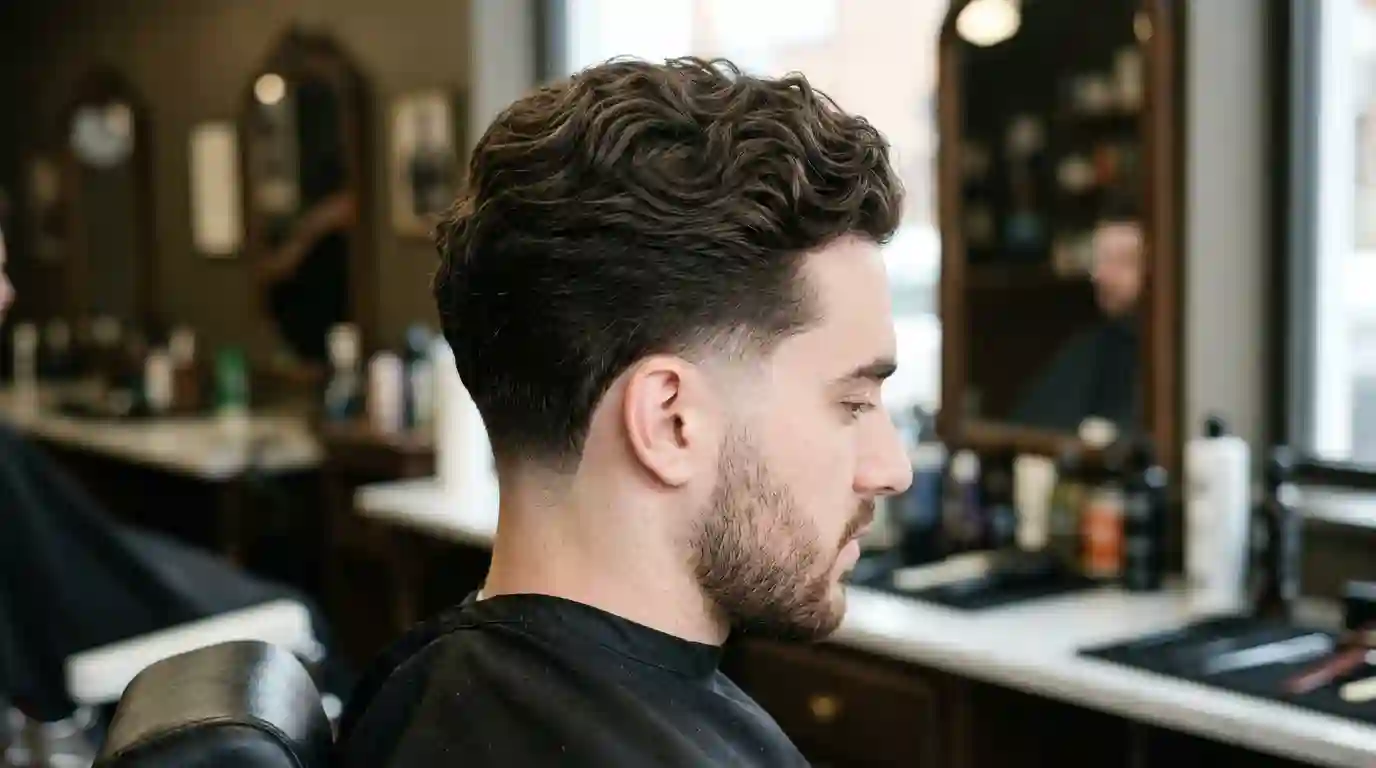
Low taper fade styles for wavy hair are a great choice for men who want a clean, modern, and easy-to-manage haircut. This style keeps the hair short around the ears, sideburns, and neckline while leaving natural waves on top.
You can choose a messy wavy top, textured fringe, side part, quiff, or longer hairstyle. A low taper fade also works with different hair types, including loose waves, thick wavy hair, and hair that falls between waves and curls.
The best haircut depends on your wave pattern, face shape, hair length, and personal style. This guide explains popular styles, barbering tips, styling products, and simple ways to maintain your haircut.
What Is a Low Taper Fade for Wavy Hair?
A low taper fade is a haircut where the hair gradually becomes shorter around the sideburns, ears, and neckline. The fade starts low on the head, leaving more fullness on the sides than a mid taper fade or high fade.
For wavy hair, the barber keeps enough length on top to show the natural wave pattern. This creates a balanced look with clean edges and textured hair.
Some men prefer a soft shadow fade, while others like a sharper skin fade. You can also combine a low taper with a mullet, textured fringe, or brushed-back hairstyle.
15 Best Low Taper Fade Styles for Wavy Hair
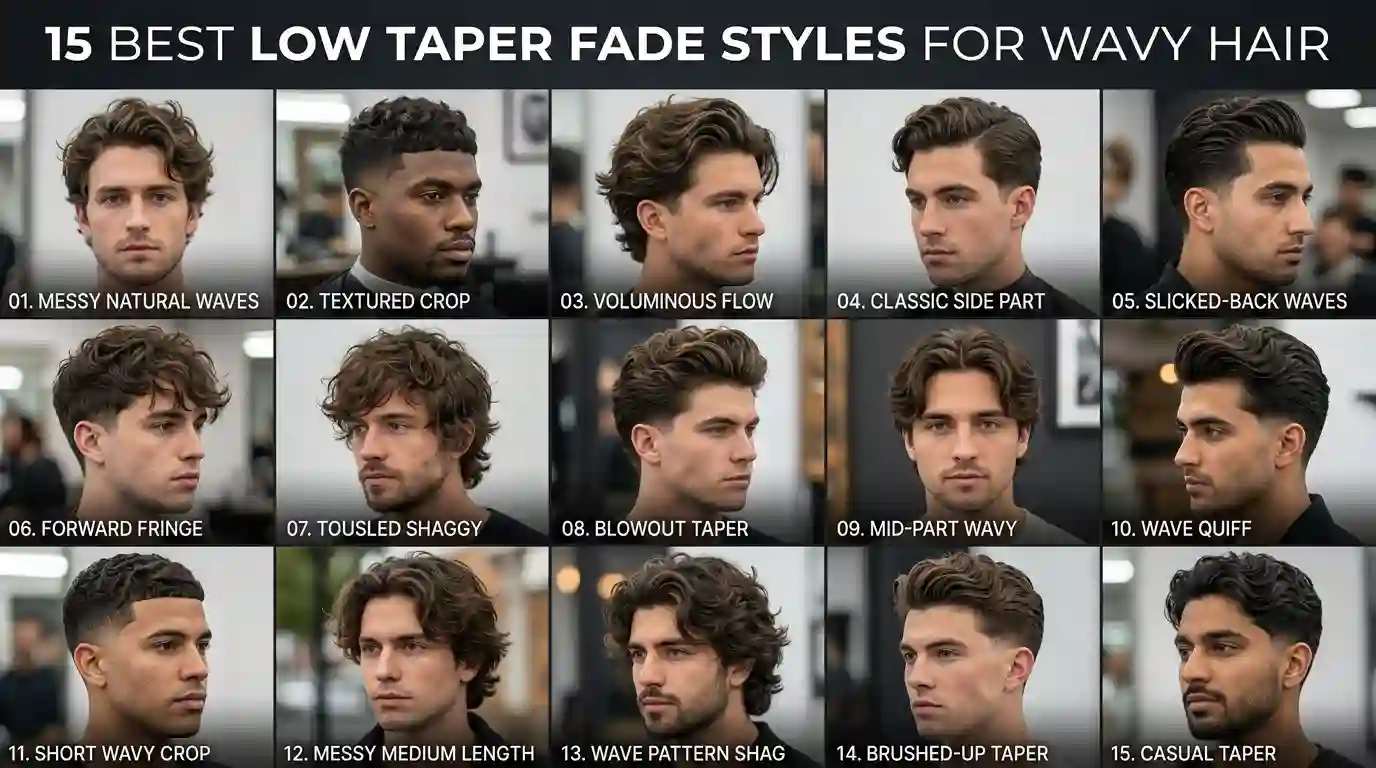
1. Classic Low Taper Fade
The classic low taper fade is a simple choice for men who want a neat and natural look. The sides and back are tapered gently, while the top keeps its natural waves.
This haircut can suit different face shapes, including oval, square, and heart-shaped faces. Ask your barber to keep the blend soft and leave enough length for easy styling.
2. Low Taper Fade with Wavy Fringe
A low taper fade with a wavy fringe leaves the front hair longer so it falls over the forehead. The waves create movement and give the haircut a relaxed appearance.
This style works well with a textured fringe or a slightly messy finish. Use a small amount of styling cream to shape the front without making it stiff.
3. Low Taper Fade with Messy Waves
A messy wavy top is ideal for men who prefer a casual hairstyle. The top stays loose and textured, while the taper keeps the sides neat.
Apply a little matte clay or styling cream to damp or dry hair, depending on the product instructions. Use your fingers to create natural movement instead of combing every strand into place.
4. Low Taper Fade with a Middle Part
A middle part allows wavy hair to fall on both sides of the face. It works best when the top has enough length to create a natural curtain shape.
Men with medium or long wavy hair can try this style. Ask your barber to maintain the length on top and blend the sides without making the haircut look too short.
5. Textured Low Taper Fade
A textured top gives wavy hair more shape and movement. The barber may use careful layering to reduce excess bulk while preserving the natural waves.
This style can work well for thick hair that looks heavy or flat. A light matte paste or texture powder may help create separation between the waves.
6. Short Wavy Hair with a Low Taper
Short wavy hair with a low taper is easy to maintain. The top stays short but keeps enough texture to show the natural wave pattern.
This haircut is useful for men who want a simple daily routine. A small amount of lightweight mousse or styling cream can help shape the hair.
7. Medium-Length Wavy Hair with a Low Taper
Medium-length wavy hair offers more styling choices. You can wear it forward, move it to one side, or leave it loose and messy.
This style is a good option for men who want length without losing a clean finish. Regular trims can maintain the taper while allowing the top to grow.
8. Long Wavy Hair with a Low Taper
Long wavy hair with a low taper creates a contrast between the longer top and shorter sides. The top can fall naturally or form a loose bro flow.
This style suits men who want to keep their waves rather than cut them short. Use a leave-in conditioner to help the hair stay soft and manageable.
9. Low Taper Fade with Curly-Wavy Hair
Some men have strong waves that turn into loose curls. A low taper fade with curly hair keeps the sides neat while allowing the natural curls to stand out.
Curl-enhancing cream can help define the texture and control frizz. Ask your barber to consider curl shrinkage, because curls may look shorter after drying.
10. Low Taper Fade with a Side Part
A side part creates a more organized hairstyle. The hair moves to one side, while the low taper keeps the sideburns and neckline clean.
This look can work for casual and formal occasions. Use a light styling product to keep the waves in place without removing their natural movement.
11. Brushed-Back Wavy Hair with a Low Taper
The brushed-back style moves the hair away from the forehead. Natural waves add volume, while the low taper creates a tidy finish around the sides.
A blow dryer can help guide the hair backward. Use a heat protectant first and avoid too much heat, which may make the hair dry or frizzy.
12. Wavy Quiff with a Low Taper
A wavy quiff adds height at the front. The waves give the top a natural shape, and the low taper keeps the sides neat.
This style may suit men who want more volume around the forehead. Use a lightweight mousse and a blow dryer on low heat to lift the front.
13. Low-Volume Wavy Hair with a Low Taper
A low-volume style keeps the waves close to the head instead of creating a tall shape. It is a good option for men who prefer a simple, natural haircut.
Use a light leave-in conditioner if your hair feels dry. Avoid heavy pomade or thick styling products if they make your waves look flat.
14. Low Taper Fade with a Line-Up
A line-up creates clean edges around the forehead and temples. Combined with a low taper fade, it gives wavy hair a sharp finish.
Ask your barber to follow your natural hairline. A line-up should improve the haircut’s shape without making the edges look unnatural.
15. Low Taper Mullet with Wavy Hair
A low taper mullet keeps the hair longer at the back while tapering the sides near the ears and neckline. Wavy texture adds movement and makes the longer section look natural.
This style is bolder than a classic taper. Ask your barber to blend the sides carefully so the transition between the top, sides, and back looks balanced.
How to Choose a Low Taper Fade for Your Wave Type
Wavy hair can have different patterns. Understanding your wave type can help you choose a suitable haircut and styling routine.
Type 2A: Loose Waves
Type 2A hair has soft, loose waves that may look almost straight near the roots. A short textured top, side part, or light fringe can help show the wave pattern.
Use a lightweight product so the hair does not become heavy or flat.
Type 2B: Defined Waves
Type 2B hair has more visible S-shaped waves. A messy top, textured fringe, or middle part can show this natural movement.
A small amount of matte clay or styling cream can help define the waves. Avoid using too much product because it may make the hair look greasy.
Type 2C: Strong Waves
Type 2C hair has deeper waves and may include loose curls. A low taper fade keeps the sides neat while leaving enough length for the natural texture.
Use a moisturizing conditioner and curl-enhancing cream if your hair needs extra moisture. A diffuser can help dry the hair while keeping its wave pattern.
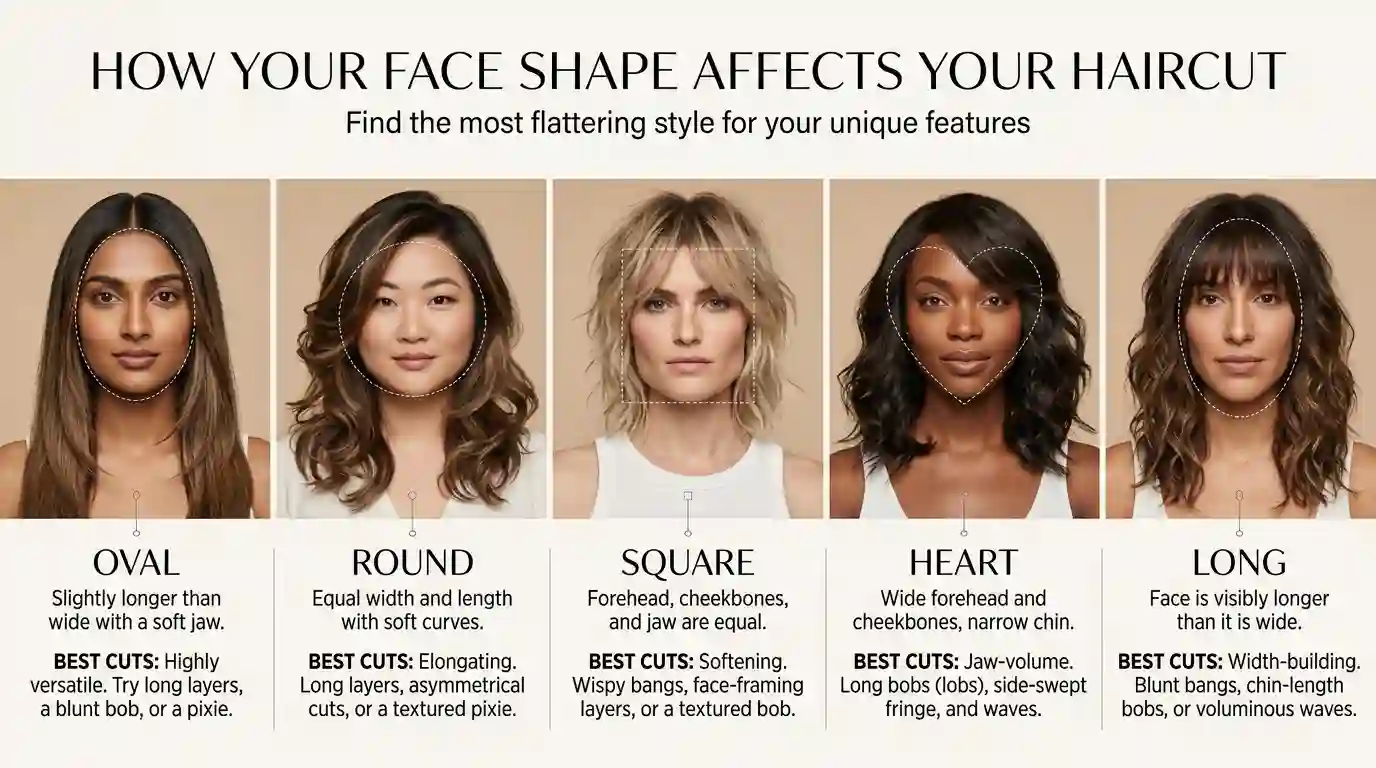
How Face Shape Can Affect Your Haircut
Your face shape can help you decide how much volume and length to keep on top.
- Oval face: Most low taper styles can work well with this shape.
- Round face: A textured top or quiff can add height.
- Square face: A classic taper or textured top can complement strong features.
- Heart-shaped face: A soft fringe may help balance a wider forehead.
- Diamond face: A side part or natural-flow style can add balance around the sides.
- Triangular face: A fuller top may help balance a narrower forehead.
These are general ideas, not strict rules. Your hair density, wave pattern, and personal preference also matter.
Low Taper Fade vs. Mid Taper Fade vs. High Fade
A low taper fade starts near the ears and neckline. It creates a subtle finish and keeps more fullness on the sides.
A mid taper fade starts higher and creates more visible contrast. A high fade removes more hair from the upper sides, creating a bolder look.
A shadow fade leaves a soft, gradual transition. A skin fade blends the hair down to very short stubble or bare skin near the bottom.
Choose a low taper if you prefer a natural and balanced appearance. If you want more contrast, a mid taper or high fade may suit your preference better.
How to Explain Your Haircut to a Barber
Clear instructions help your barber understand the style you want. Show a reference photo and explain how much length you want to keep.
You can ask for:
- A low taper around the sideburns, ears, and neckline.
- Enough length on top to show your natural waves.
- A textured fringe, side part, or middle part if desired.
- A smooth blend between the sides and the top.
- A natural hairline or a line-up.
- Careful removal of extra bulk if your hair is thick.
A good barber considers hair texture, density, wave pattern, and head shape before cutting. If you want to grow your hair longer, explain this before the haircut begins.
Low Taper Fade Tutorial with a Trimmer
A low taper fade tutorial with a trimmer can help you understand the basic process. However, creating a smooth blend takes practice, especially around the ears and back of the head.
Barbers use clipper guards of different lengths to gradually shorten the hair. They blend each section carefully to avoid harsh lines between longer and shorter areas.
If you trim your hair at home, start with a longer guard and work slowly. Use a mirror to check the back, and avoid taking the taper too high. For a first haircut, a professional barber can usually create a more even result.
How to Style Wavy Hair with a Low Taper Fade
Follow these simple steps to style your haircut:
- Wash your hair with a gentle shampoo when needed.
- Pat it dry with a towel instead of rubbing it hard.
- Apply a small amount of leave-in conditioner or styling cream.
- Shape the waves with your fingers.
- Let the hair air-dry or use a diffuser on low heat.
- Avoid touching the hair too much while it dries.
If you want more volume, gently lift the roots while drying. For a smoother finish, guide the hair into place while it is still slightly damp.
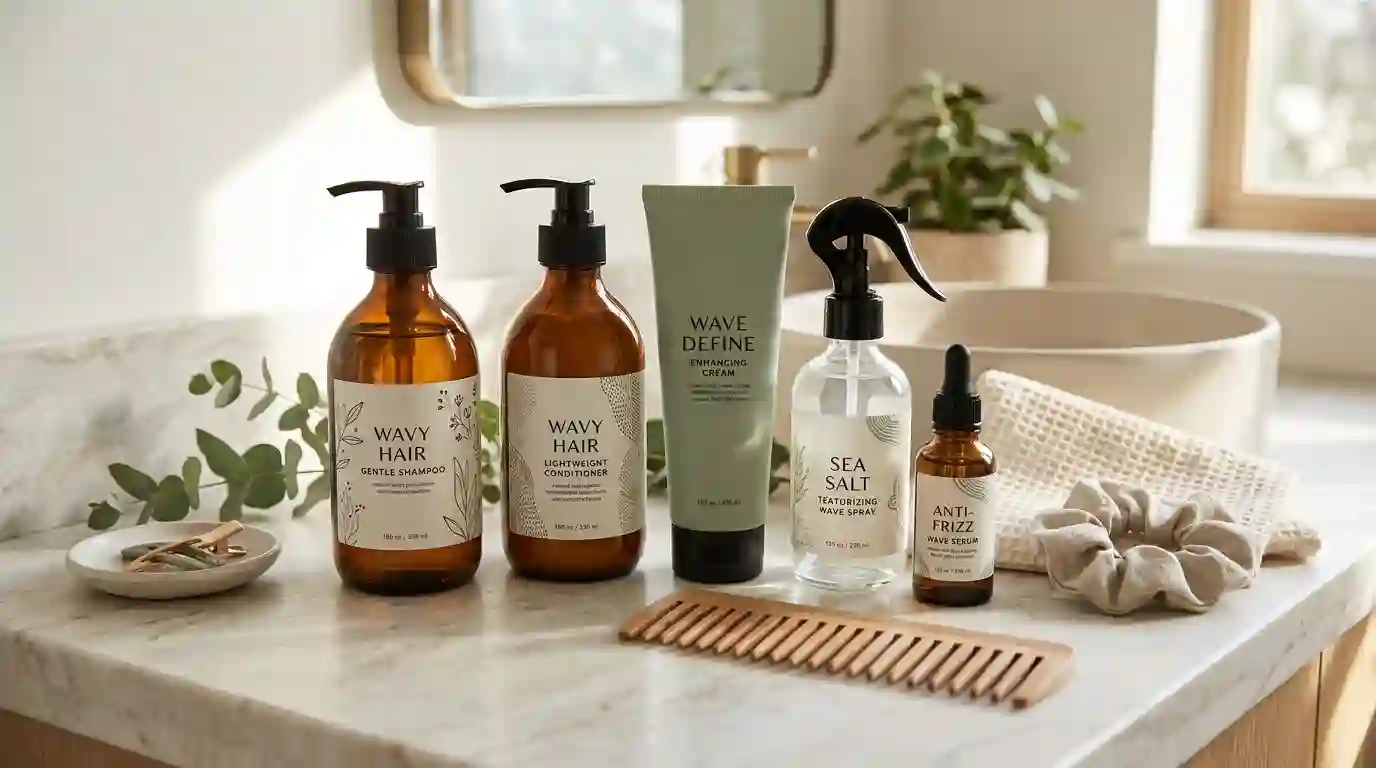
Best Products for Wavy Hair
The right products can help you style your waves without making them heavy.
- Sea salt spray: Adds texture and a slightly tousled finish. It may dry out some hair types, so use it carefully.
- Matte clay: Helps create a natural-looking, textured style.
- Molding paste: Adds shape and separation to the waves.
- Curl-enhancing cream: Helps define waves and loose curls.
- Light mousse: Adds volume without a heavy finish.
- Leave-in conditioner: Helps keep hair soft and manageable.
- Moisturizing conditioner: Helps reduce dryness and improve softness.
- Heat protectant: Helps protect hair when using a blow dryer.
Choose products based on your hair’s needs. Fine hair may need lighter products, while thick or dry hair may benefit from extra moisture.
How to Control Frizz and Maintain Your Hair
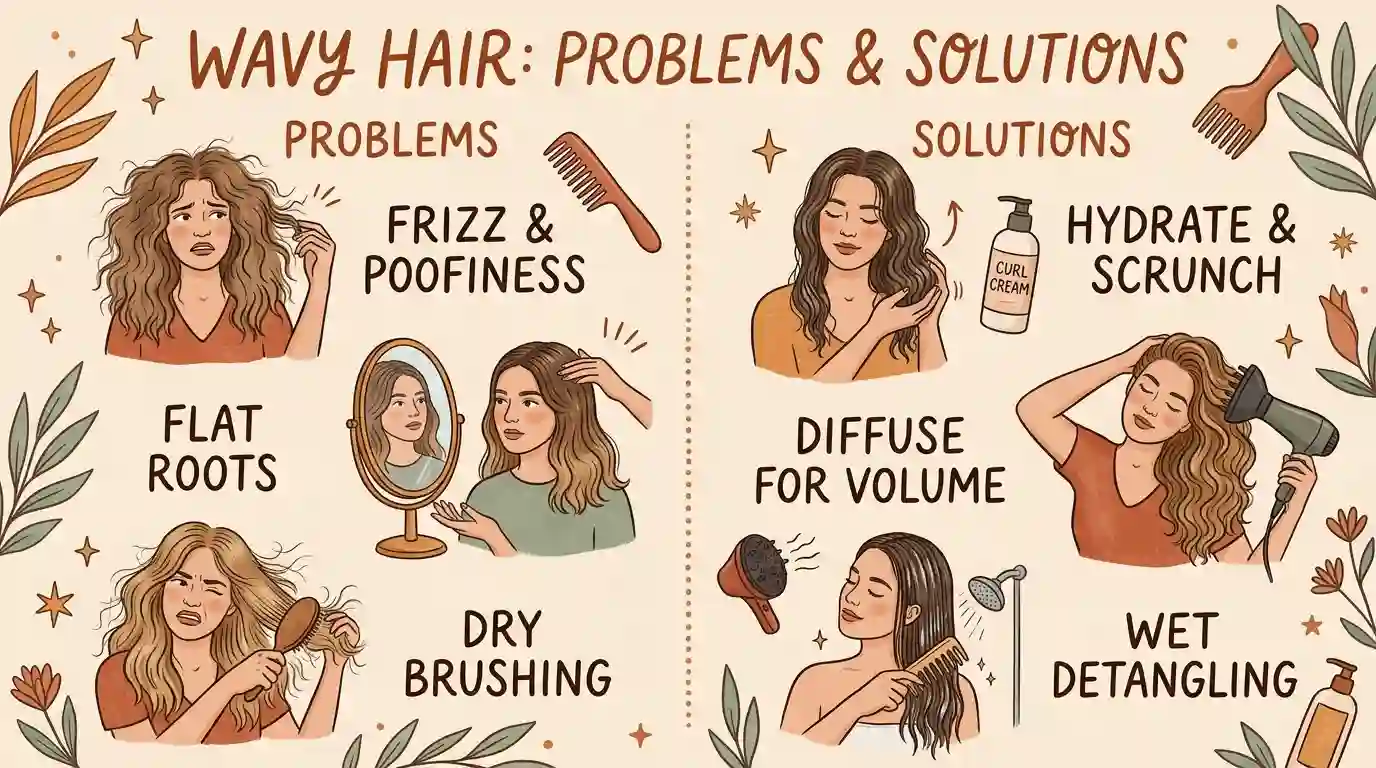
Frizz can make wavy hair look rough or puffy. Use conditioner, avoid rubbing your hair with a towel, and apply a small amount of styling cream when needed.
A microfiber towel can help dry hair with less rough rubbing. Avoid brushing your waves too much when they are dry, because this can make them look bigger and less defined.
A low taper fade often needs a trim every two to four weeks to keep the sides and neckline neat. The exact schedule depends on how quickly your hair grows and how sharp you want the taper to look.
If you are growing your hair longer, ask your barber to clean up the taper while keeping the top length.
Common Wavy Hair Problems and Solutions
Frizzy Waves
Use a moisturizing conditioner and avoid rough towel-drying. A small amount of leave-in conditioner or curl cream may help control frizz.
Flat Waves
Heavy products can weigh down the hair. Try a lightweight mousse and gently lift the roots while drying.
Puffy Sides
If your hair sticks out around the sides, ask your barber to remove extra bulk and blend the taper properly. Cutting the fade too high is not always the best solution.
Uneven Wave Pattern
Natural waves do not always look the same across the head. Ask your barber to work with your natural texture instead of forcing every section into the same shape.
Dry or Rough Hair
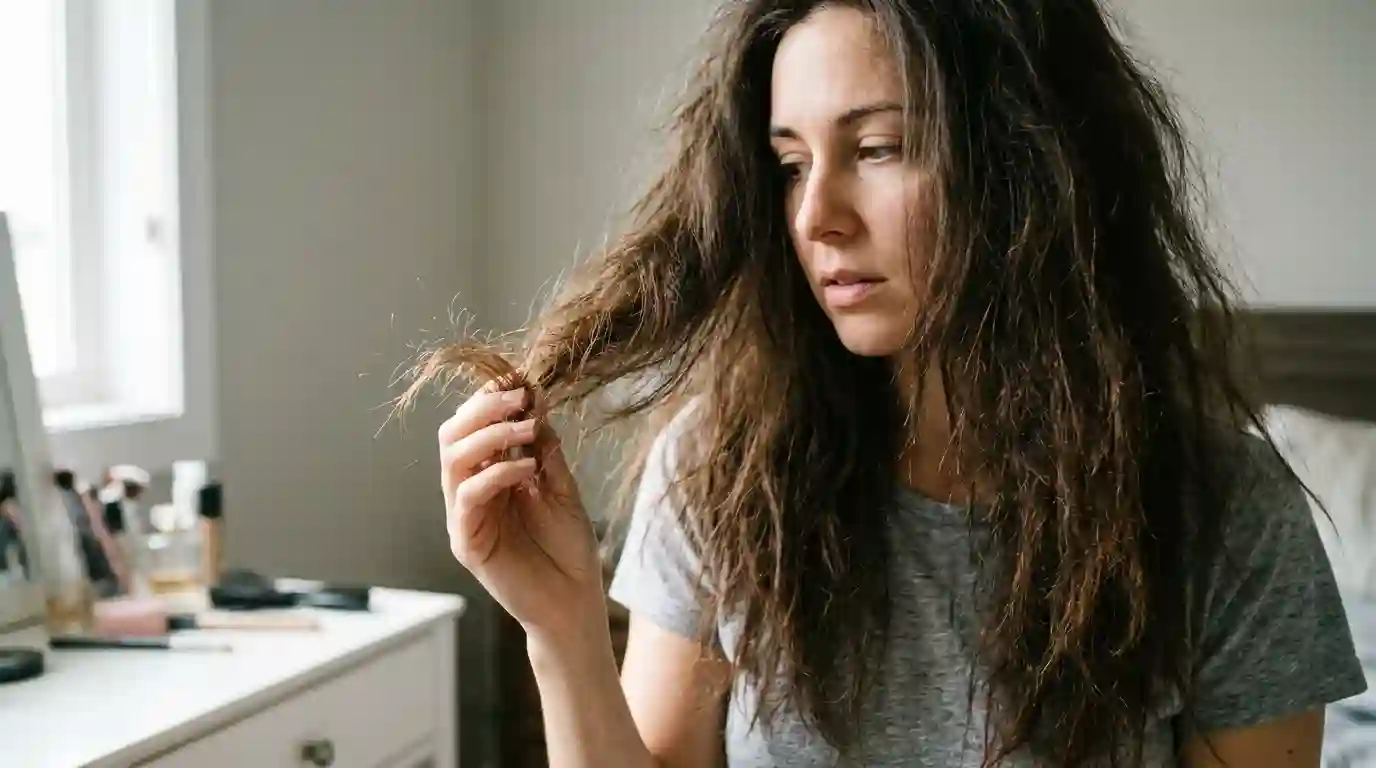
Use a moisturizing conditioner and reduce unnecessary heat styling. A microfiber towel and a suitable leave-in conditioner can help keep the hair softer.
Common Mistakes to Avoid
- Choosing a haircut without checking how your waves look when dry.
- Cutting the top too short when you want a fringe or middle part.
- Asking for a high fade when you want a low taper.
- Using too much heavy styling product.
- Brushing the hair too much after it dries.
- Using sea salt spray too often if it makes your hair dry.
- Cutting your own fade without enough practice.
- Waiting too long between trims when you want a sharp finish.
Frequently Asked Questions
Yes. A low taper fade keeps the sides neat while allowing the natural wave pattern to stand out on top.
A classic taper, messy waves, textured fringe, and middle part are all good choices. The best option depends on your hair length, wave pattern, and preferred look.
Type 2A hair has loose waves, Type 2B has more defined S-shaped waves, and Type 2C has stronger waves that may include loose curls.
Yes. A low taper fade can work with straight hair. However, straight hair will not show natural waves unless you style it to create texture.
Yes. A low taper fade can work with curly hair by keeping the sides neat and leaving enough length on top for curls to form naturally.
A low taper gives a softer, more subtle finish. A mid taper starts higher and creates more contrast. Choose the style that best matches your preferred appearance.
Light styling cream, curl-enhancing cream, mousse, and leave-in conditioner can help. Matte clay may be useful for a textured finish, while sea salt spray can add texture.
Many men get a trim every two to four weeks. The right schedule depends on how quickly the hair grows and how neat you want the sides to look.
It is possible, but blending the hair evenly takes practice. Start with longer clipper guards and work slowly. A professional barber may be a better option if you are new to fading.
Final Thoughts
Low taper fade styles for wavy hair offer many choices, from short and simple cuts to messy waves, textured fringes, and longer hairstyles. The low taper keeps the sides neat while allowing your natural texture to stand out.
Choose a style that suits your wave pattern, face shape, and daily routine. Use suitable styling products, avoid excessive heat, and maintain the taper with regular trims. With the right haircut and care, wavy hair can look clean, natural, and easy to manage.
